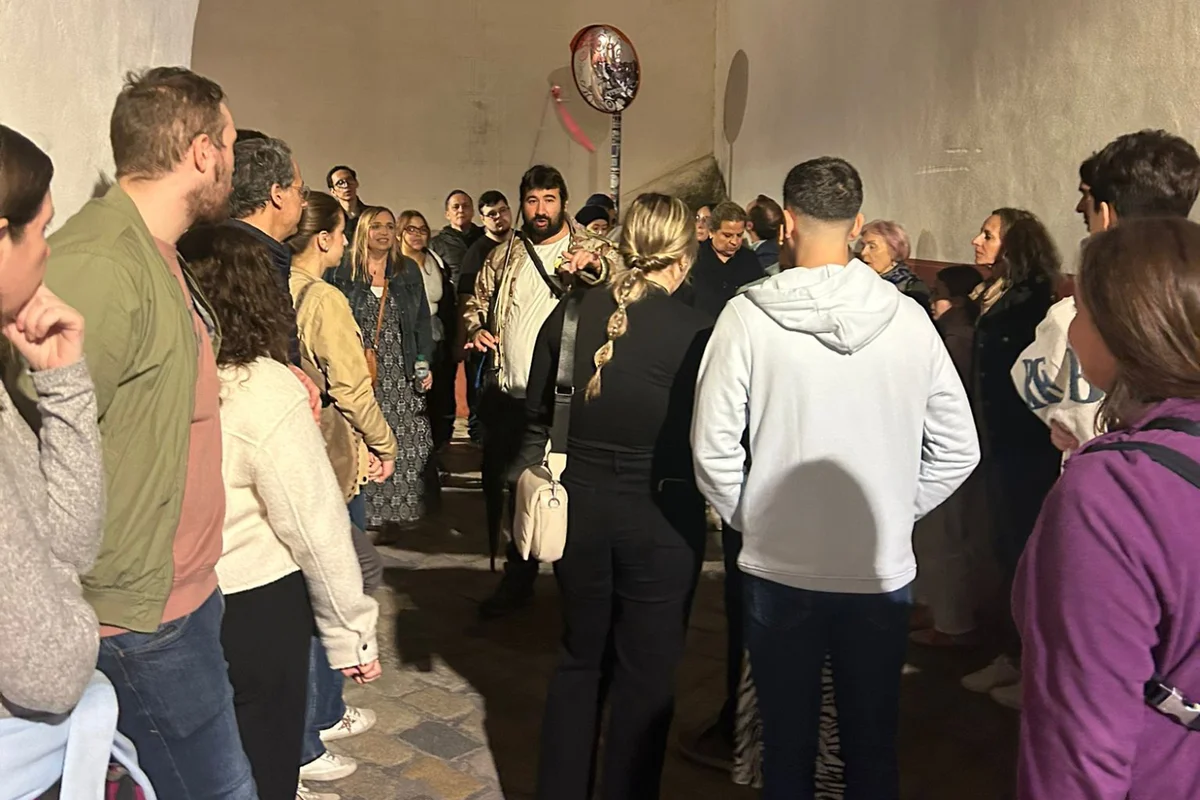
Seville Archives - Page 2 of 5 - Naturanda

Wine Tasting in Seville with Tapas

Vino tinto

Wine tasting in the centre of Seville:
the best wines of the province

Local guides

Direct supplier

More than 2000 reviews

This guided tasting takes you on an unforgettable journey through Seville’s most emblematic wine regions. Perfect for small groups, this experience offers total immersion in the province’s most authentic wines and flavours.

Experience Itinerary

  1. Fortified wine from the Lower Guadalquivir: we begin our tour with this fortified wine that captures the essence of the Sevillian river, with its dry and elegant character.
  2. Aljarafe White Wine: next, we move our senses to the Aljarafe, delighting ourselves with a white wine that shines for its freshness and delicate aromas.
  3. Sierra Norte Red Wine: in the next stage, between holm oaks and mountains, you will enjoy this robust and full of life red wine, with an unmistakable texture.
  4. Sierra Sur Sweet Wine: we continue our journey to the valleys of the Sierra Sur. This sweet wine unfolds its silkiness with an enveloping character, a true reflection of the generosity of its land.
  5. Campiña Liqueur: we close the tour in the Sevillian countryside with a liqueur of aromatic richness and warm character that pays homage to local traditions.

Each sip will be accompanied by the perfect pairing to celebrate the unique flavours of Seville and its gourmet essence.

  1.  

Prices

Adult
75,00 €

Book Now

Details

Check availability in the booking calendar

The meeting point is VinumPlay, in calle Carlos Cañal nº32 – See in Google Maps.

Meeting time: 19:30 pm

About 2h

Tasting of 5 Spanish wines, accompanied by a selection of the best tapas from different regions of the country

English and Spanish For other languages, please contact us

At Naturanda we offer the possibility to book our activities, excursions and visits as a private group. For more details, please contact us.

Our activities have a free cancellation policy 24 hours before the tour starts.
Do you need more information? Click on our Refund and cancellation policy for tours and activities.

If you wish, you can consult our frequently asked questions by clicking here.

If you wish, you can check the opinions of our clients on TripAdvisor or on our social networks.

How useful was this post?

Click on a star to rate it!

Average rating 0 / 5. Vote count: 0

No votes so far! Be the first to rate this post.

Need help?

Share this activity

Related activities

No posts found.

Seville Hot Air Balloon Ride

Hot Air Balloon Ride
in Seville

Local guides

Direct supplier

More than 2000 reviews

Seville Hot Air Balloon Ride

Book Now

Flying over the Seville countryside is a unique and magical experience that will give you the opportunity to contemplate landscapes and villages from a different perspective.

The region surrounding Seville, with towns such as Aznalcóllar, Gerena and other villages close to the capital, is renowned for its rich history, rural charm and vibrant culture. From the heights, you can clearly see the warm colours of the traditional buildings and the majesty of the churches and squares of these picturesque municipalities. The natural beauty of the surrounding countryside, with its green fields and hills, unfolds majestically before our eyes, showing us a panoramic view worthy of admiration.

The rivers and streams running through the villages take on a special beauty from this aerial perspective. The vegetation unfolds before us in a symphony of colours.

Flying over the surroundings of Seville in a hot air balloon is an experience that involves all our senses.

The balloon ride is also an opportunity to capture spectacular photos of the city and its surroundings, with panoramic views that can only be achieved from the air. From above, Seville and its surrounding villages appear as a work of art, with their colours, textures and unique architecture that remains etched in the memory of those who dare to live this experience.

Prices

Adults +10 years / Children from 4 to 10 years / Infants from 0 to 3 years (OR 4 years under 1m tall) / Senior tickets from 60 years old.

Adult Ticket
190,00 €
Children Ticket
165,00 €

Details

  • Tickets available for Mon and Fri.
  • Tour availability is subject to weather conditions.

The meeting point is at Venta Pazo, AV Antonio Pazo S/N, Sanlúcar la Mayor. – View on Google Maps

Approximately 1:30h

  • Individual 1 h – 1.30 h Balloon Flight.
  • Toast with cava.
  • Picnic breakfast.
  • Water on board.
  • Video of the flight.
  • Flight hat.
  • Flight Diploma.
  • Civil Liability insurance

Spanish and English.

If you wish, you can consult our frequently asked questions by clicking here.

If you wish, you can check the opinions of our clients on TripAdvisor or on our social networks.

How useful was this post?

Click on a star to rate it!

Average rating 0 / 5. Vote count: 0

No votes so far! Be the first to rate this post.

Need help?

Share this activity

Related activities

Hidden Gems of Seville: Metropol Parasol and Macarena

Hidden Gems
of Seville

Local guides

Direct supplier

More than 2000 reviews

Discover Seville's hidden gems

Book your tour

Seville is a city with many mysteries and legends. There are many places full of history that can go unnoticed.

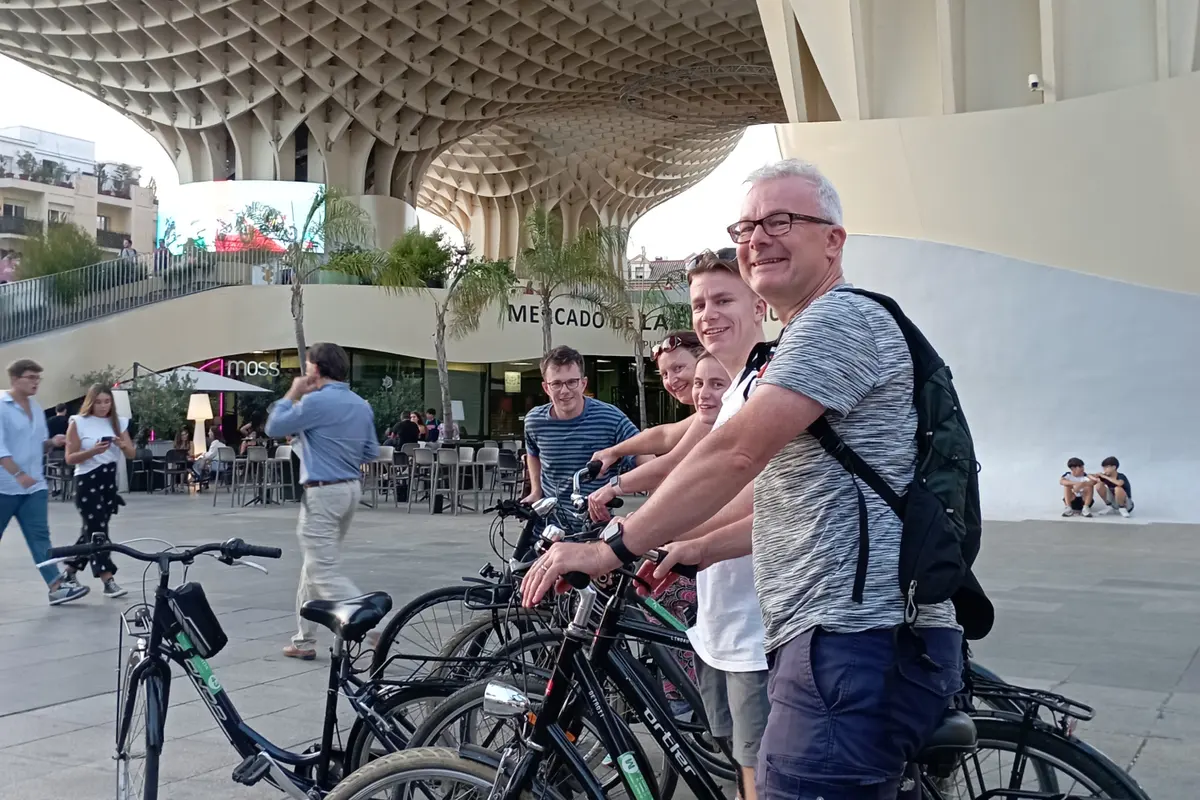
Discover the Macarena neighbourhood with our guides. On this route, which starts at the famous “Mushrooms of Seville“, you will learn more about the Mudejar churches, the market in Feria Street and the famous street market “el Jueves“.

We will also visit the Macarena Basilica. We will cross the Macarena Gate, the only “gate” of Seville still standing, and walk along Calle San Luis, which is full of exciting mysteries to be discovered.

Throughout the tour, our guides will share fascinating stories about local traditions and legends. Every corner of the Macarena has its own story to discover, making this tour a unique experience for lovers of Sevillian history and culture.

In addition to the architectural gems and charming corners, this tour also allows you to discover the little details that make Seville a unique city, such as its hidden courtyards or its cobbled streets full of stories.

You may also be interested in: El Cardo Máximo – Heritage Seville Route

Prices

Adult
20 €
Child
12 €
Infant
0 €

Details

  • Tour available on: Wed – Sun.
  • Please also check availability in the booking calendar.

The meeting point is at Plaza de la Encarnación, Casco Antiguo, 41003 – Sevilla – See in Google Maps.

Approximately 1 hour and 30 minutes.

  • Guided visit.

Spanish and English

At Naturandawe offer you the possibility of carrying out all ouractivities, excursions and visits for private groups. For more details, please contact us .

  • Food and beverages are not included.
  • As a general rule all our activities have a free cancellation policy up to 24 hours before the tour.
  • Need more information? Click on our Refund and cancellation policy for tours and activities.
  • If you wish, you can consult our frequently asked questions by clicking here.

    If you wish, you can check the opinions of our clients on TripAdvisor or on our social networks.

    How useful was this post?

    Click on a star to rate it!

    Average rating 0 / 5. Vote count: 0

    No votes so far! Be the first to rate this post.

    Need help?

    Share this activity

    Related activities

    Dolphin and whale watching excursion in Tarifa from Seville

    Delfines

    Dolphins and whales Watching
    in Tarifa from Seville

    Local guides

    Direct supplier

    More than 2000 reviews

    Enjoy a unique activity and an afternoon on the beaches of Tarifa.

    Book Now

    Situated just 13 km from the Moroccan coast, Tarifa is one of the main crossing points of the Strait of Gibraltar. It is also a very popular destination because of the quality of its beaches, which can be enjoyed for a large part of the year thanks to the warm climate of these lands.

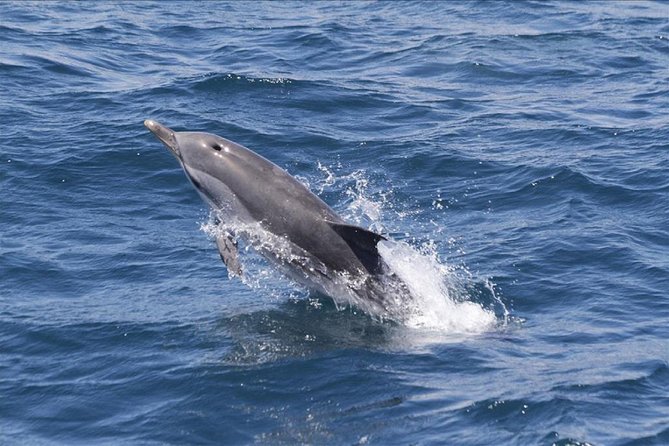
    Our excursion will start at one of Naturanda’s meeting points with everything you need to enjoy dolphin watching in the Strait of Gibraltar. The activity lasts about 2:30 hours, during which you will enjoy a walk to observe and learn about the fascinating world of cetaceans.

    The Strait of Gibraltar is an area declared a Biosphere Reserve, and although there are up to seven different species of cetaceans, whales and dolphins are the most common and abundant.

    Its geographical location is privileged, as you will find yourself between two continents: Africa and Europe, two countries: Morocco and Spain; and right where the Atlantic Ocean meets the Mediterranean Sea.

    After finishing the activity, you can enjoy an afternoon on the beaches of Tarifa before returning with our transport to Seville.

    If you’re spending a few days in Seville, you can also make the most of your stay by booking our Day trip to Ronda and the White Villages.

    Prices

    Adults
    109,00 €
    Children
    89,00 €
    Students 17-25 yo
    89,00 €
    Infants 0-3 yo
    35,00 €

    Details

    • Regular tour: Tue – Thu – Sat – Sun. This availability is subject to weather conditions. You can check the exact availability in the booking calendar.
    • Reservation available up to 10h before the start time.
    • This tour is available at: 08:30. The meeting time may vary depending on ferry timetables and the time of year. Please consult the booking calendar to confirm the time available on your desired date.
    • For your convenience, we offer multiple meeting point options:


    IF YOUR DAY TRIP IS AT 6:30 AM
    IF YOUR DAY TRIP IS AT 7:00 AM


    IF YOUR DAY TRIP IS AT 7:30 AM


    IF YOUR DAY TRIP IS AT 8:00 AM
    IF YOUR DAY TRIP IS AT 8:30 AM
    • Please note that these pick-up points will be the same as the drop-off points at the end of the tour. We recommend arriving at the departure point well in advance to ensure a smooth experience.
    • Cetacean watching is an activity suitable for everyone (including children and pregnant women). Should conditions not be suitable for them, they will be notified in advance.
    • We recommend that you bring water, comfortable clothing and footwear, and avoid wearing flip-flops on board where possible. It is also advisable to bring a warm jumper. In hot weather, don’t forget to bring sun cream and a change of clothes.
    • The departure time and whether the tour goes ahead may be subject to sea and weather conditions.

    The sighting lasts about 2h 30 min.

    • Fully equipped boats for whale watching.
    • Specialised marine biologist guide during the sighting.

    Tour available in Spanish and English. For other languages, please contact us.

    At Naturanda we offer you the possibility of carrying out all our activities, excursions and visits for private groups. For more details, please contact us

    If you wish, you can consult our frequently asked questions by clicking here.

    If you wish, you can check the opinions of our clients on TripAdvisor or on our social networks.

    How useful was this post?

    Click on a star to rate it!

    Average rating 0 / 5. Vote count: 0

    No votes so far! Be the first to rate this post.

    Related activities

    Private Tour Maria Luisa Park and Plaza de España

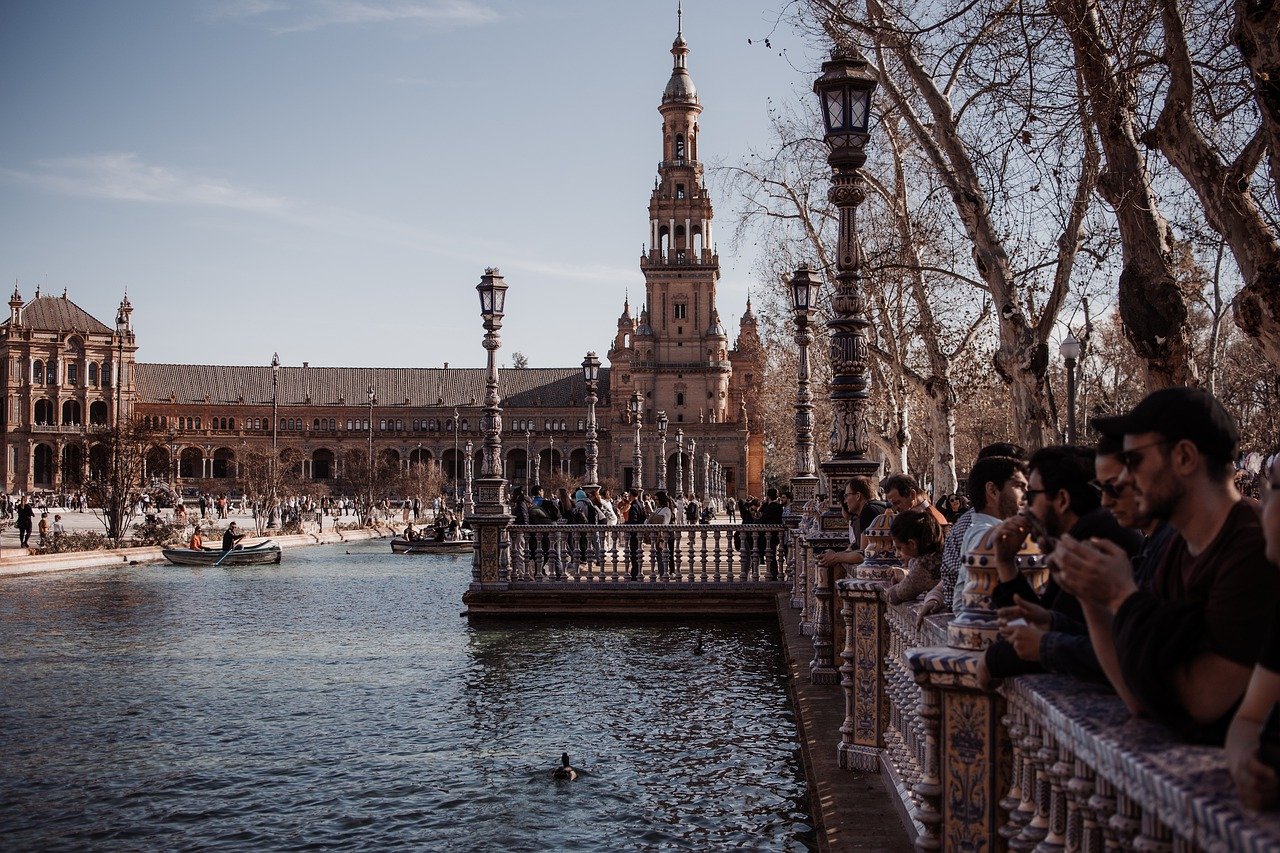
    Plaza De Espana Barcos Sevilla

    Private Tour
    Secrets of Maria Luisa Park
    and Plaza de España

    Local guides

    Direct provider

    More than 2000 reviews

    Exclusive Exploration: Unveiling the Hidden Gems of Maria Luisa Park and Plaza de España

    Make your reservation

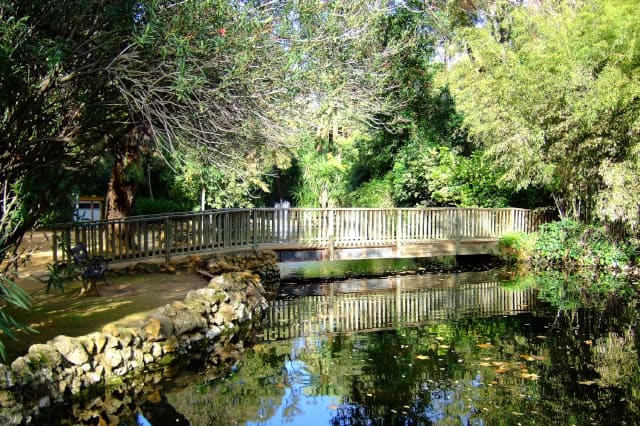
    Maria Luisa Park is the first urban park in Seville and one of the city’s important green spots as well as one of its most photographic and visual natural spaces.

    Originally, it belonged to the private gardens of the Infanta María Luisa Fernanda, Duchess of Montpensier – who lived today the Palace of San Telmo, who donated it to the city of Seville in 1914, also related to King Alfonso XII.

    A few years later it would become a Site of Cultural Interest in the category of Historic Garden, serving a French landscape designer. Within it is the Plaza de España, built by Aníbal González for the Ibero-American Exhibition of 1929. It was designed as the largest site built for the event and symbolizes the embrace of the old American territories.

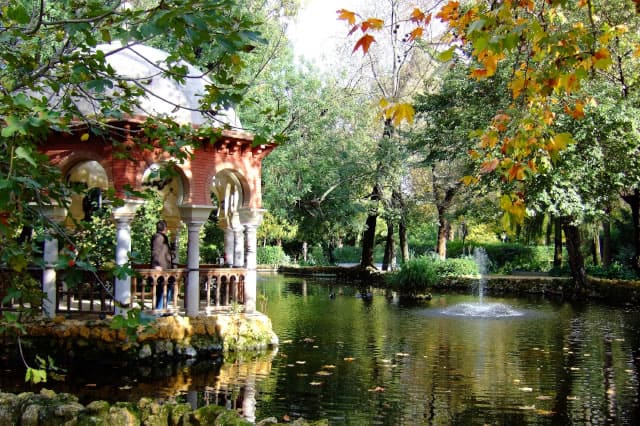
    During our private route we will enter María Luisa Park to enjoy the lush gardens, appreciate its careful details and be surprised by the design of its fountains and ceramics. Walking along its paths is like visiting the Ibero-American Exhibition of 1929.

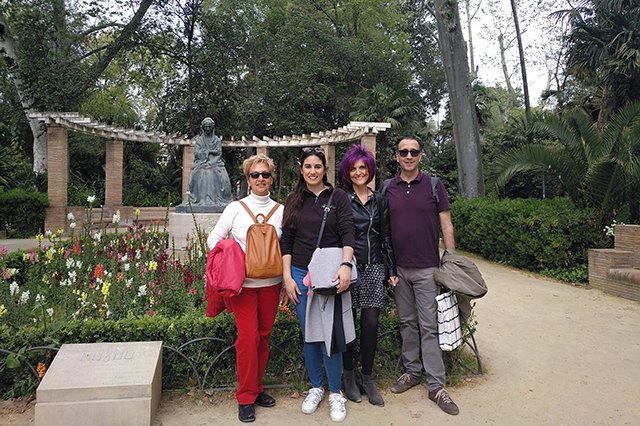
    The official guide of Naturanda will explain the natural and architectural meaning of the different spaces and discover the secrets and curiosities that go unnoticed by pedestrians, visiting the Plaza de España, the “palace gardens” is a user experience that should not pass up for being culturally very enriching, and do not miss the connection with Gustavo Adolfo Bécquer.

    We will visit in detail the Plaza de España and Plaza de América, trying to understand the works designed by Forestier and Aníbal González, where we will make a historical review of the life of some of the most illustrious Sevillians and the history of the 20th century of the city of Seville .

    You may also be interested in: Private Tour Cathedral of Seville.

    Prices

    Adults and children (1-10 people)
    137,00 €
    Extra PAX
    10,00 €

    Details

    • Regular tour Mon – Tue – Wed – Thu – Fri – Sat – Sun.
    • You can check the availability in the reservation calendar.
    • You can reserve a tour up till 10 hours before the start time.
    • At 5:00 pm during winter time.
    • At 7:00 pm during summer time
    • The meeting point is the Glorieta de San Diego fountain, Av. de María Luisa, 41013 Seville (92H6+G6 Seville).
    • See on google map the meeting point.

    2 hours approximately

    Walking tour through the Maria Luisa Park and the Plaza de España accompanied by a professional guide.

    Tour in Spanish. For other languages, please contact us.

    At Naturanda we offer you the possibility to carry out all our activities, excursions and visits for private groups. For more details, please contact us.

    If you wish you can consult our section of frequently asked questions by clicking here.

    If you wish, you can consult the opinions of our customers on TripAdvisor or on our social networks.

    How useful was this post?

    Click on a star to rate it!

    Average rating 4.9 / 5. Vote count: 69

    No votes so far! Be the first to rate this post.

    Need help?

    Share this activity

    Related Activities

    Private Tour of Seville 2h30

    Private Tour of Seville

    Local guides

    Direct supplier

    More than 2000 reviews

    Private Tour of Seville
    of 2h30

    Book Now

    See the highlights of Seville on a 2.5-hour private walking tour of the monumental area. Stroll through the historic neighbourhoods, including the medieval Santa Cruz quarter.

    Start your walking tour of Seville in the historic city centre and take in the sights of El Arenal. Head to the Plaza de Toros de la Maestranza to see the city’s old bullring. Visit the baroque Hospital de la Caridad.

    Admire the architectural wealth of Seville Cathedral and the neighbouring Alcazar, built for the Moorish Muslim kings.

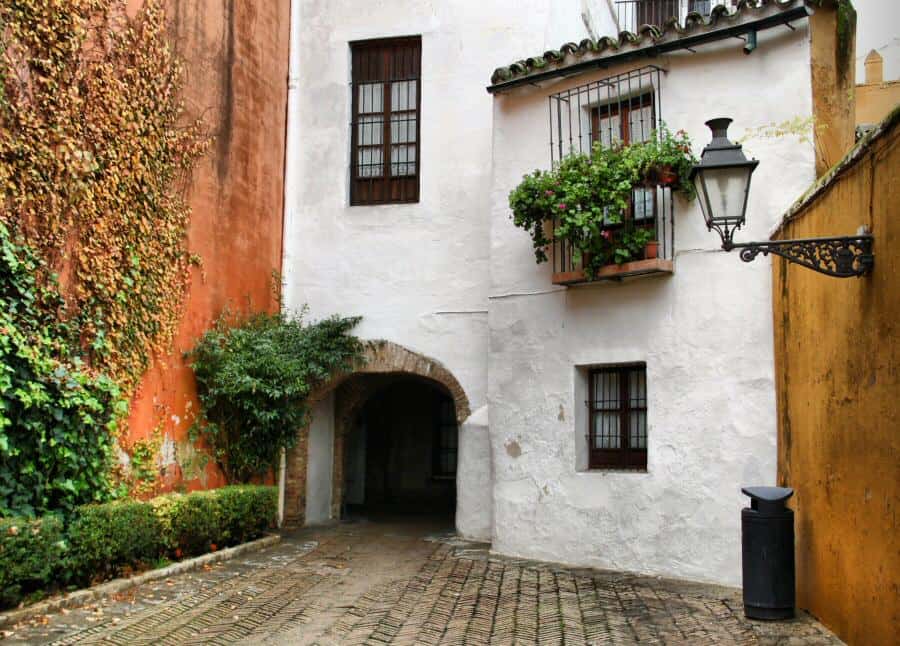
    Discover the charms of the Santa Cruz quarter, where the narrow streets and courtyards are full of flowers. Continue to Maria Luisa Park, on the banks of the Guadalquivir River, and enter the ornate Plaza de España.

    Entrance fees to the monuments are not included in the price.

    You may also be interested in: Sevilla Paranormal Private Tour.

    Prices

    Group 1-5 people
    168,00 €
    Group of 6-10 people
    200,00 €
    Group 11-20 people
    220,00 €

    Details

    • Regular Tour Mon – Tue – Wed – Thu – Fri – Sat – Sun.
    • You can check availability in the reservation calendar.

    We will pick you up from your hotel in the centre of Seville.

    2h30

    • Local Guide
    • Private Tour
    • Pick up at your hotel

    Entrance fees to monuments

    English, Italian, French, Spanish

    If you wish, you can consult our frequently asked questions by clicking here.

    If you wish, you can check the opinions of our clients on TripAdvisor or on our social networks.

    How useful was this post?

    Click on a star to rate it!

    Average rating 0 / 5. Vote count: 0

    No votes so far! Be the first to rate this post.

    Share this activity

    Related activities

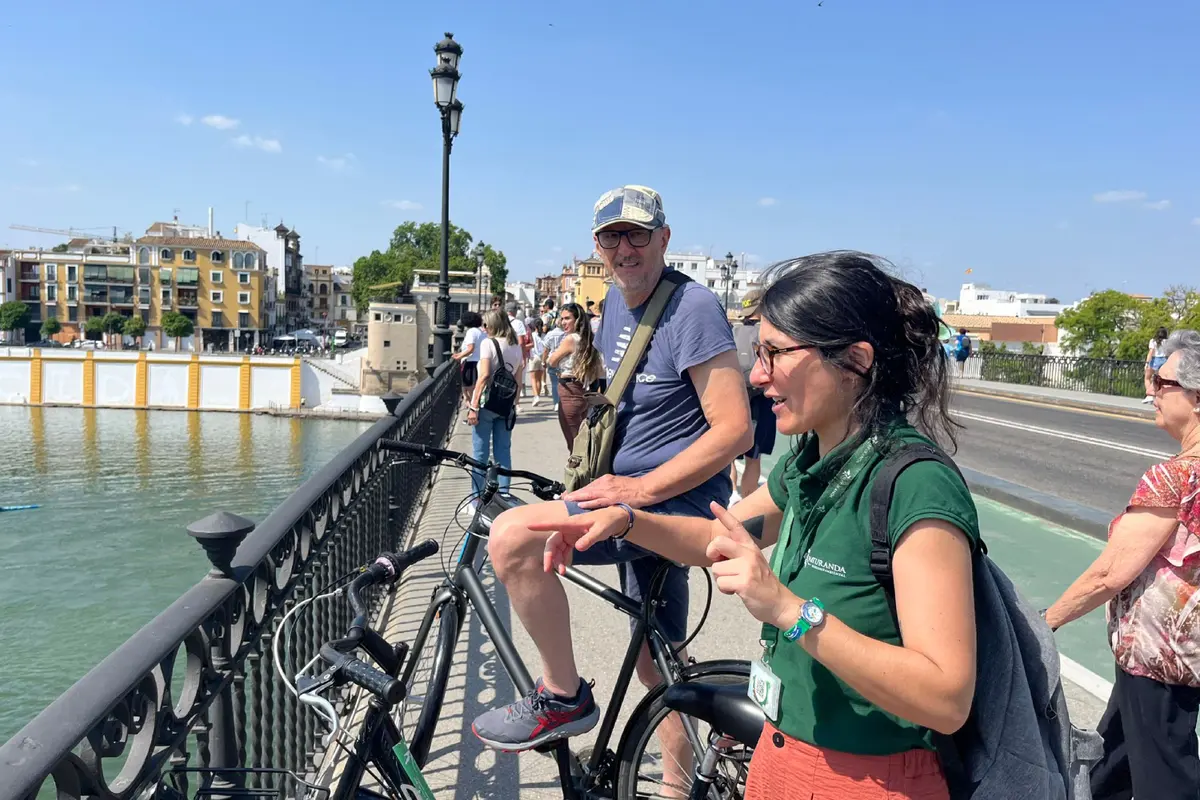
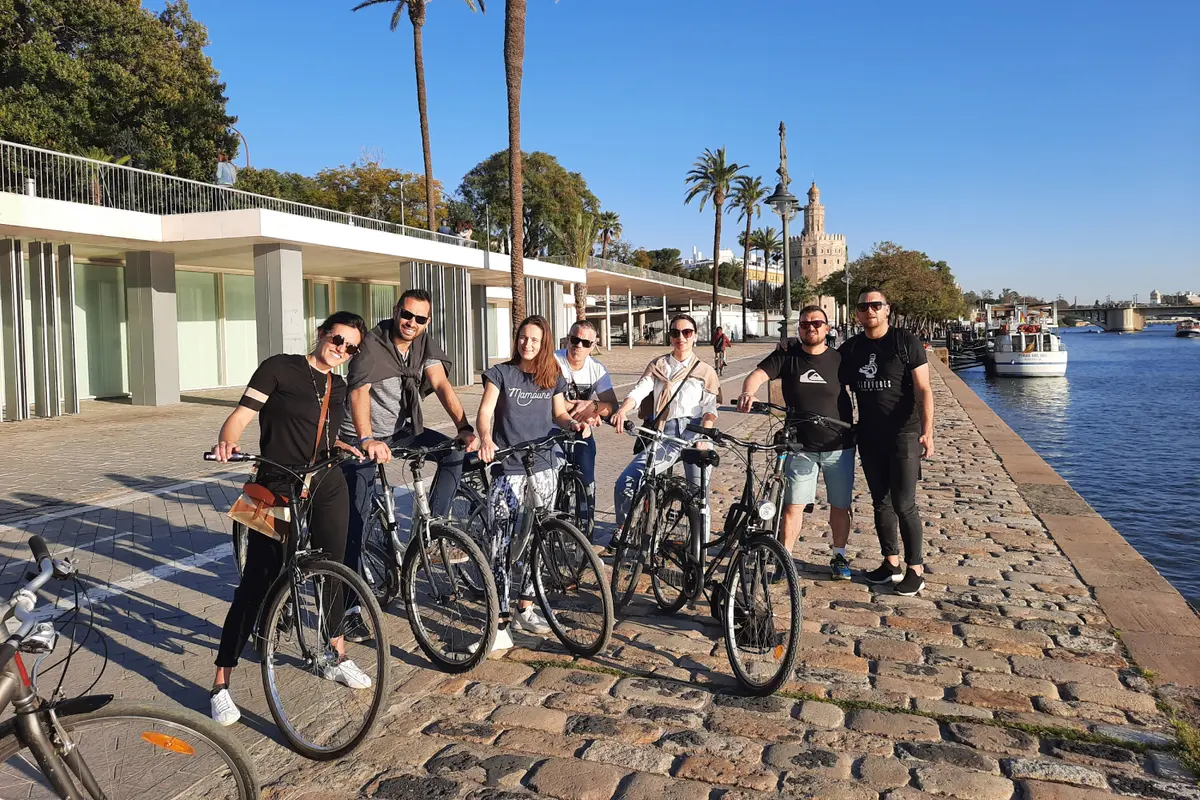
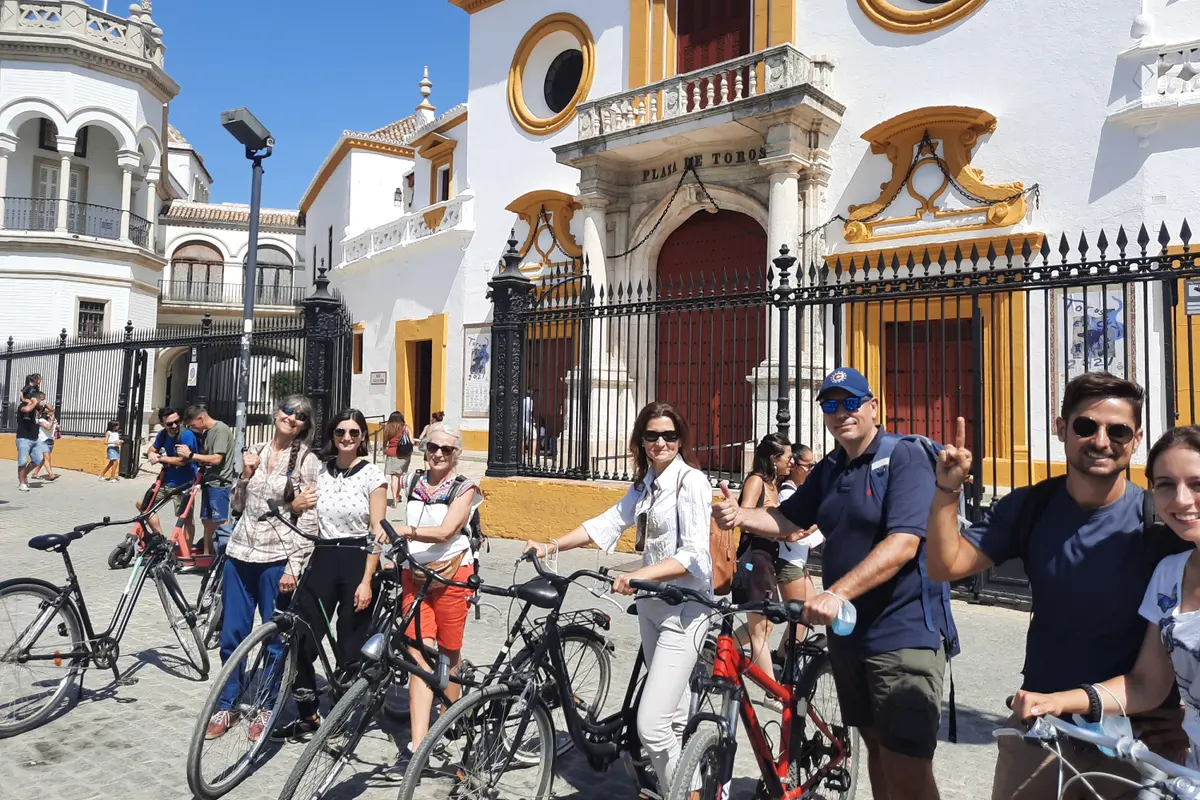
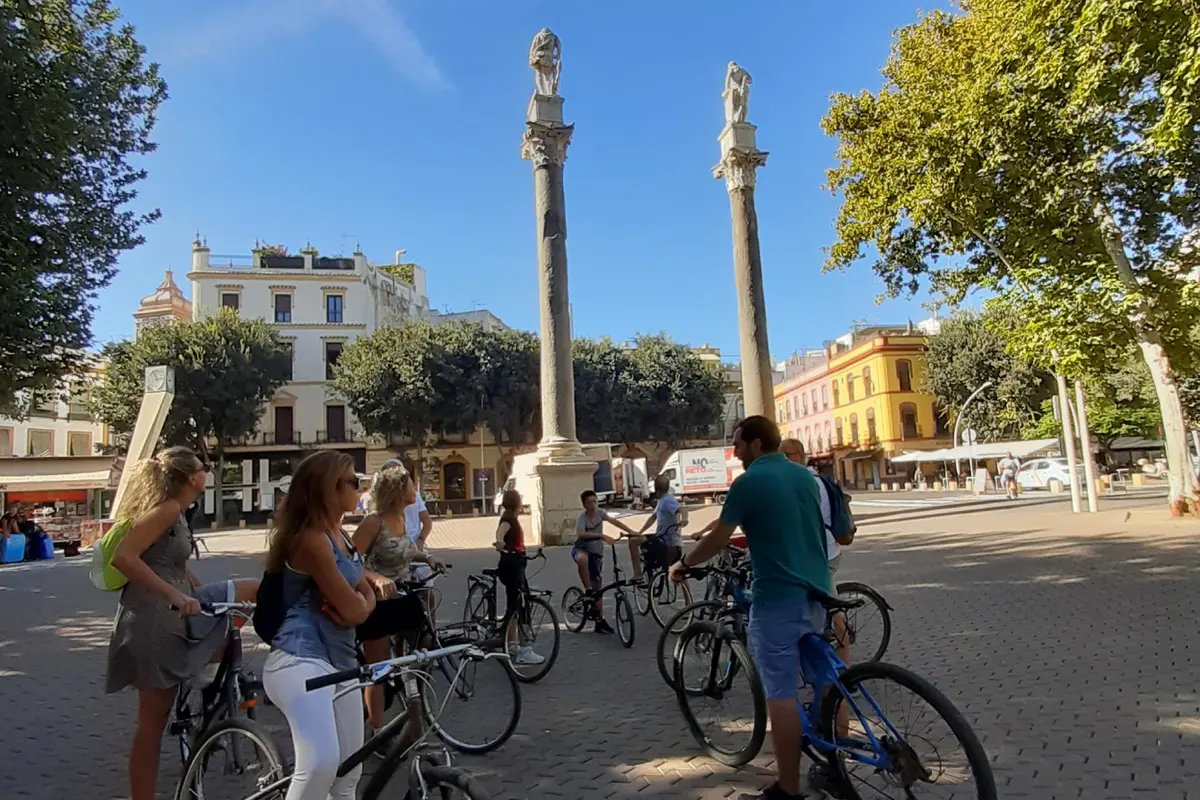
    Private bike tour of Seville

    Private bike tour of Seville
    Cycling is the best way to see Seville

    Private bike tour of Seville

    Local guides

    Direct supplier

    More than 2000 reviews

    A private bicycle tour to see Seville better

    Make your reservation

    Discover more of Seville than you could on a traditional walking tour by taking a private guided bike tour with Naturanda.

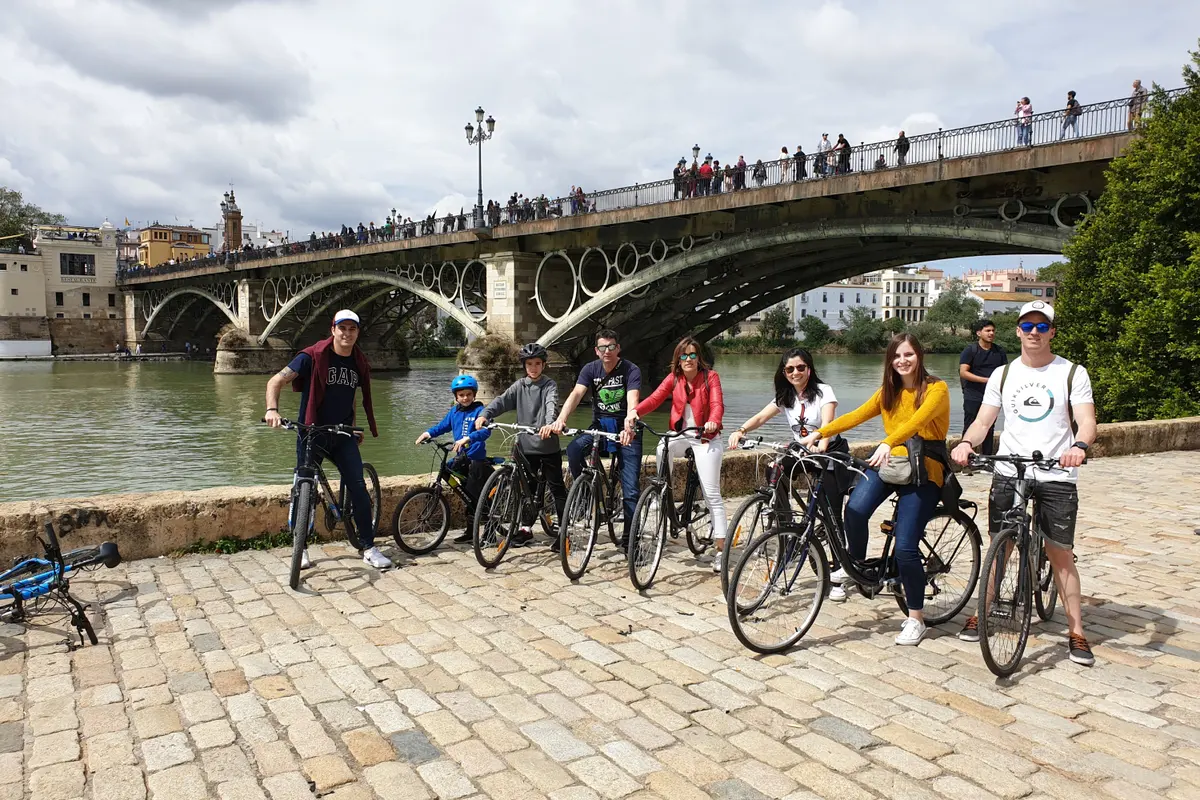
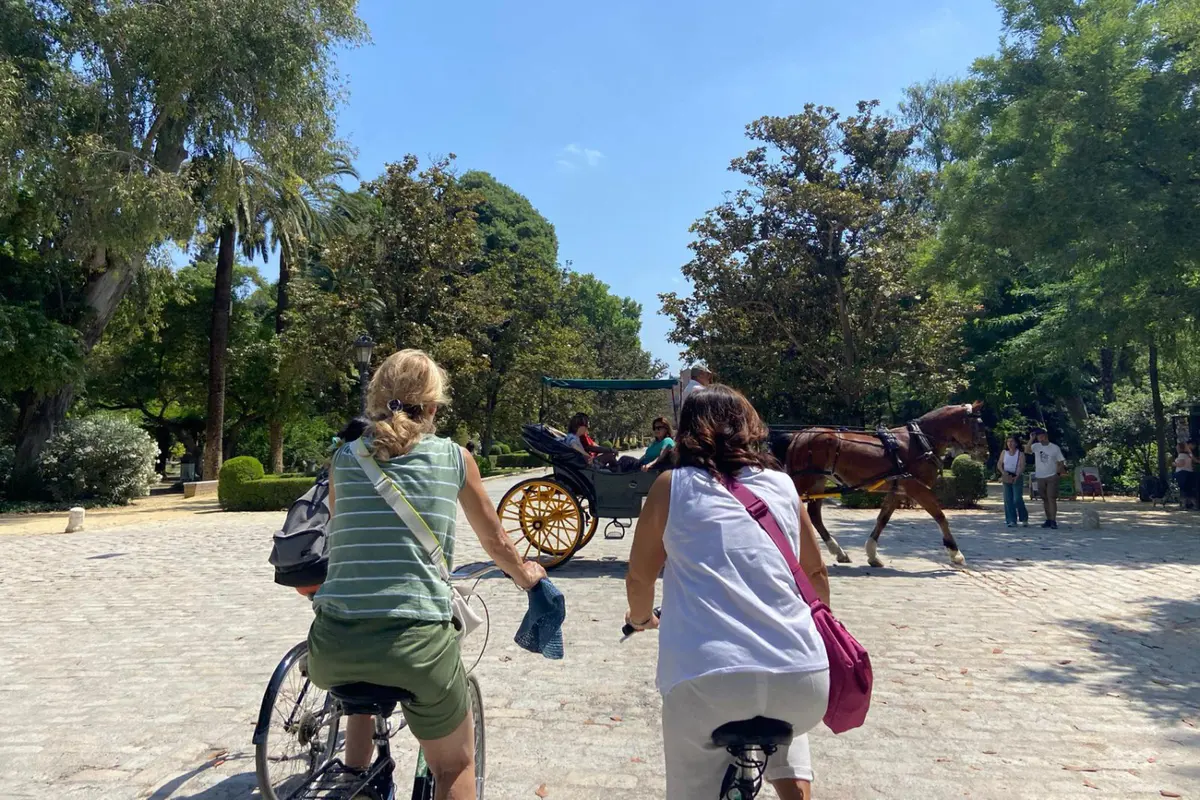
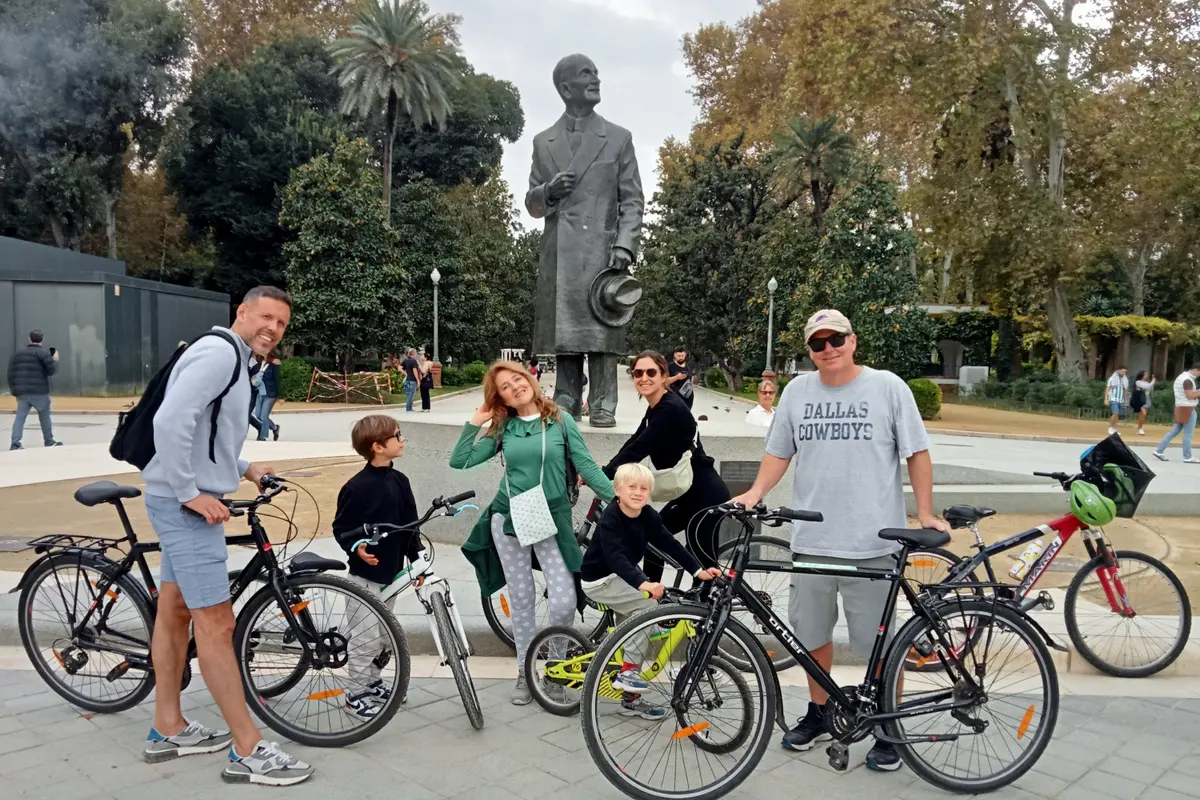
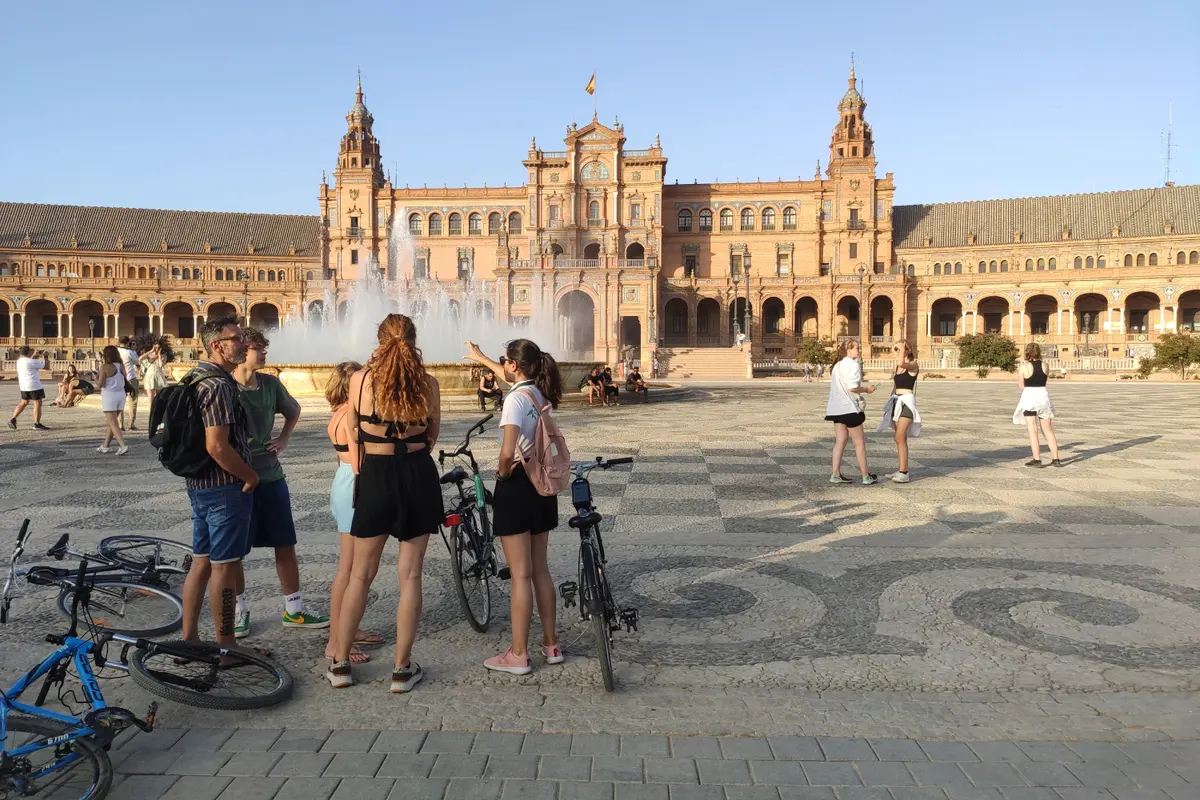
    Our private bike tour in Seville is the perfect way to see the city and avoid traffic and pollution from cars. You will be able to see more of the area than you would if you travelled by car, bus or on foot, and our comfortable bikes make it easy and enjoyable.

    You can visit all the important sights, see the Guadalquivir River, the Torre del Oro, the Palacio de San Telmo, the Murillo Gardens and the narrow streets of Seville, while getting some exercise!

    We offer these private bicycle tours of Seville every day, allowing you to explore the city at a slower pace and learn more about its history and culture.

    Our expert guides will show you all the hidden gems and the best places to take photos, and will share tips and stories about Seville.

    So why not discover the city in a unique and active way, and join one of our bike tours today?

    Prices

    Private 1 pax
    140,00 €
    Private 2 pax
    140,00 €
    Private 3 pax
    160,00 €
    Private 4 pax
    180,00 €
    Private 5 pax
    200,00 €
    Private 6 pax
    220,00 €
    Private 7 pax
    240,00 €
    Private 8 pax
    260,00 €
    Extra person
    25,00 €

    • Tour available: Mon – Tue – Wed – Thu – Fri – Sat – Sun
    • You can check availability on the booking calendar.
    • You can book a visit up to 10 hours before the start time.
    • This tour is available at: 12:00, 14:30. Please consult the booking calendar to confirm the time available on your desired date.
    • The meeting point is at the Naturanda Rastro office (Calle Rastro, 12, 41003 Seville)
    • See the meeting place on Google Maps

    Approximately 2 hours 30 minutes

    • Private bicycle tour of Seville.
    • Professional guide.
    • Guided tour of the city of Seville.

    Spanish, English, French and Italian . You can provide us with the language chosen in the reservation form. For other languages, please contact us.

    You may use the bicycle free of charge throughout the day of your reservation.

    If you wish, you can consult our frequently asked questions section by clicking
    here.

    If you wish, you can check out our customers’ reviews on TripAdvisor or on our social media pages.

    How useful was this post?

    Click on a star to rate it!

    Average rating 4.8 / 5. Vote count: 224

    No votes so far! Be the first to rate this post.

    Related activities

    Enchanted Seville Private Tour

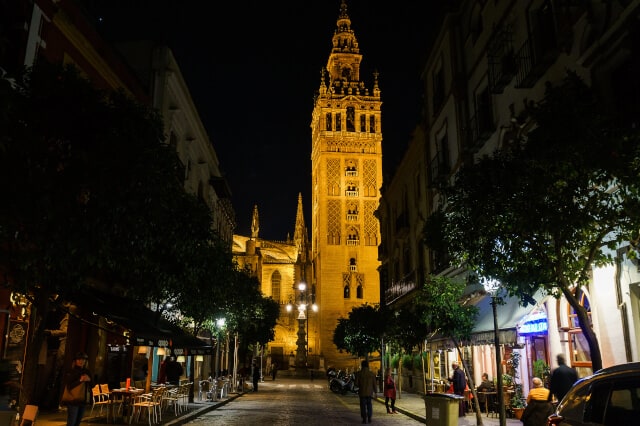
    Giralda en Sevilla Encantada

    Enchanted Seville Private Tour

    Local guides

    Direct supplier

    More than 2000 reviews

    Enchanted Seville Private Tour

    Book Now

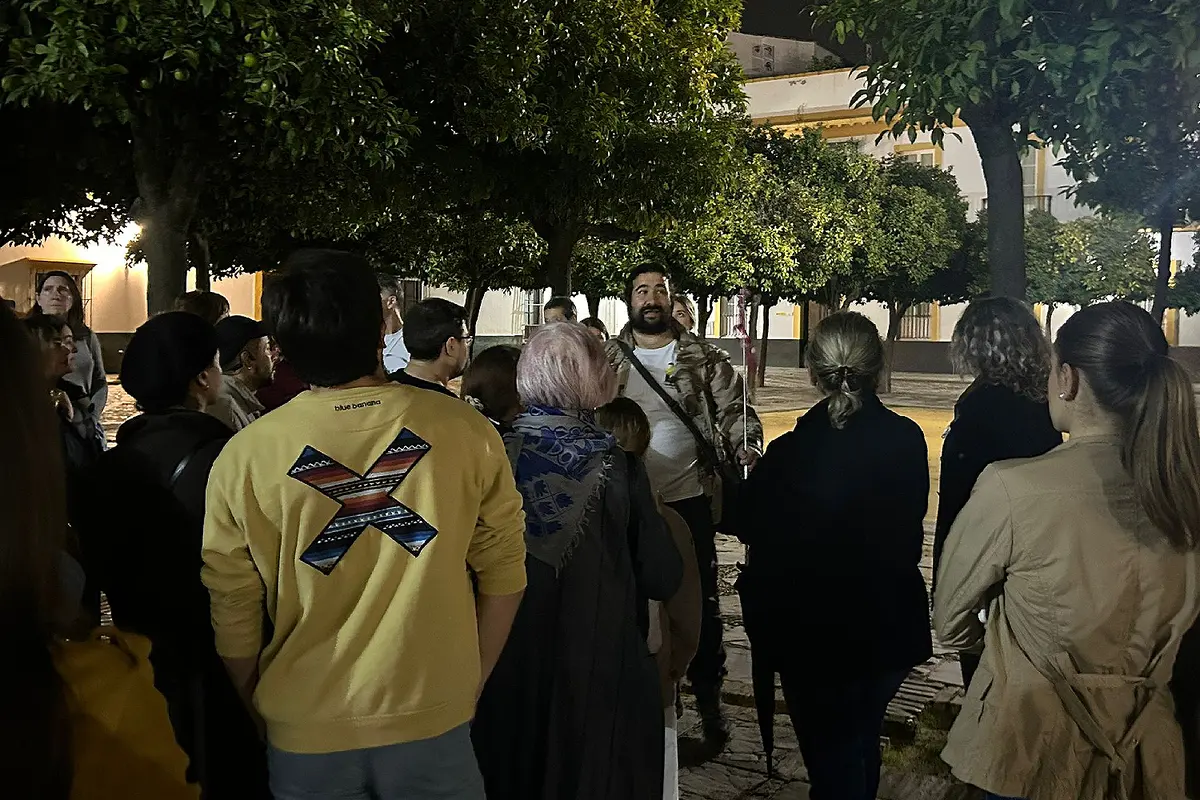
    Sevilla Encantada is a nightlife alternative. This is one of the most popular routes for lovers of history, mysteries, ghosts and legends, which over time has become one of the references and attracts both Sevillians and tourists.

    The fascination of this city full of stories, enigmas and ancestral chronicles in a private tour like the one we propose triples.

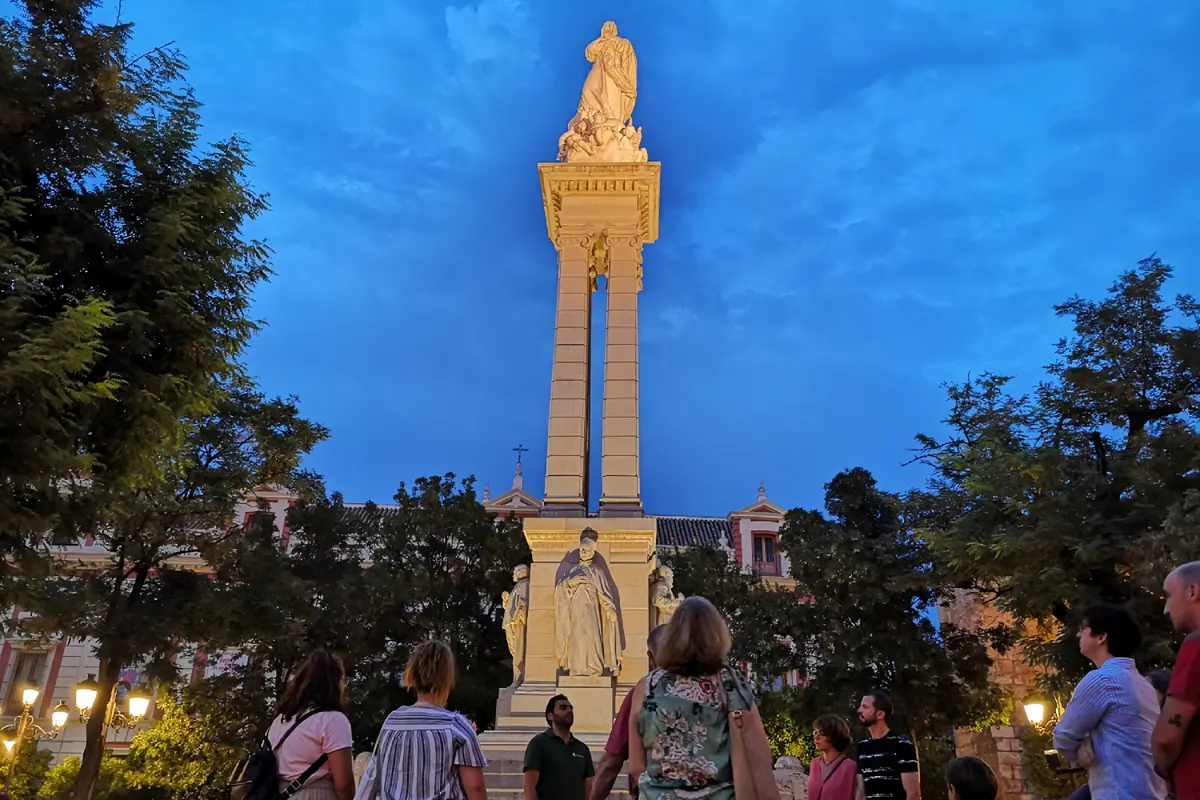
    Our tour begins at the emblematic Plaza del Triunfo, under the statue of the Immaculate Conception.

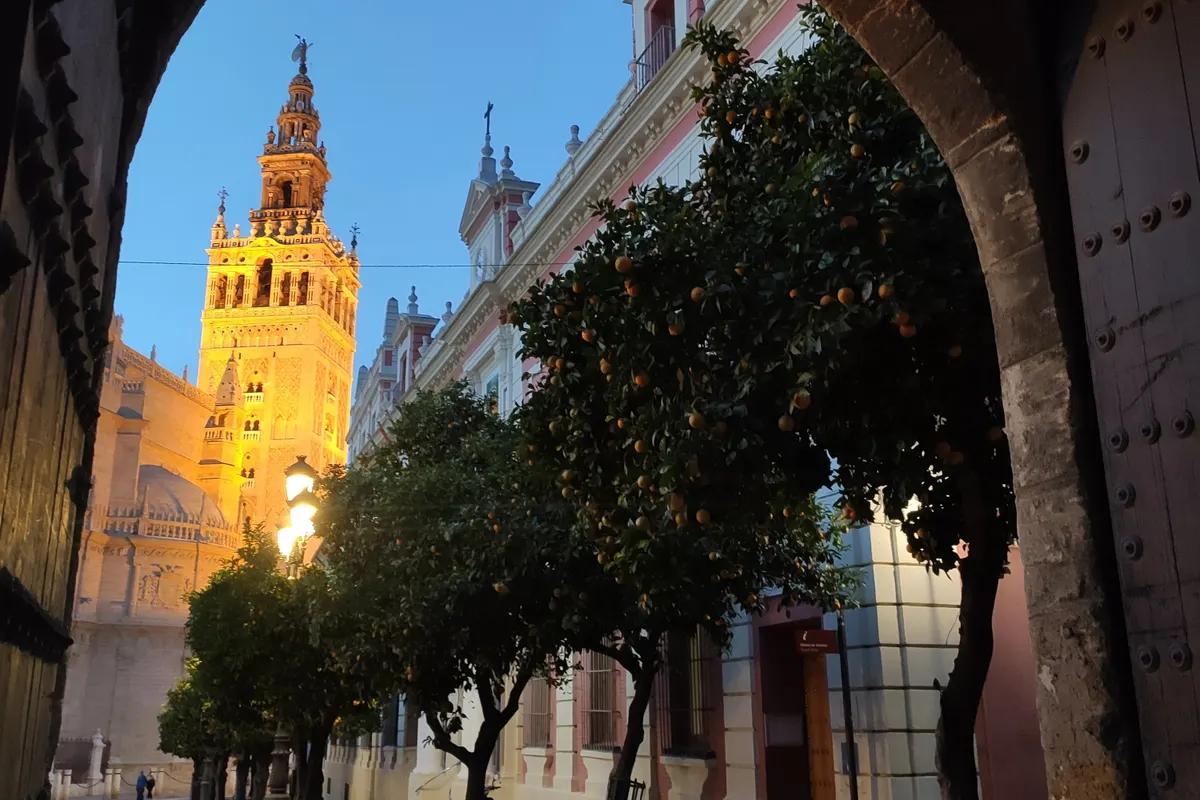
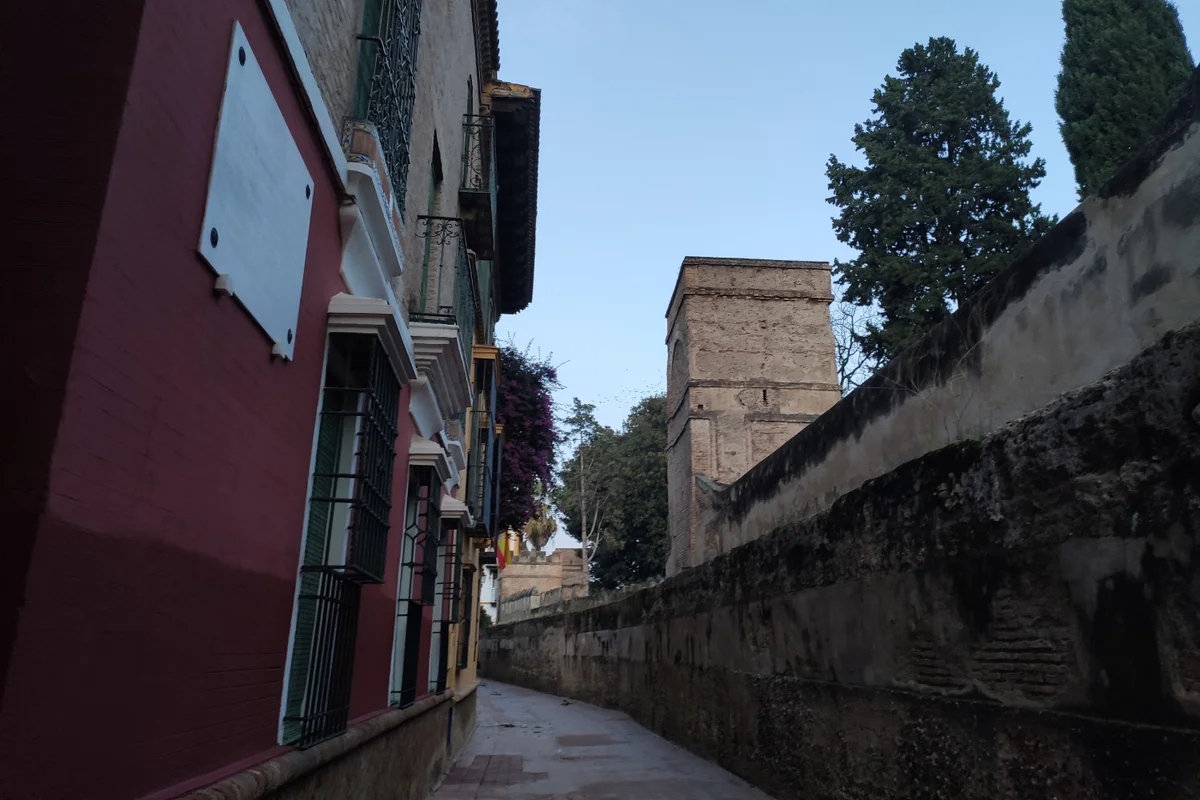
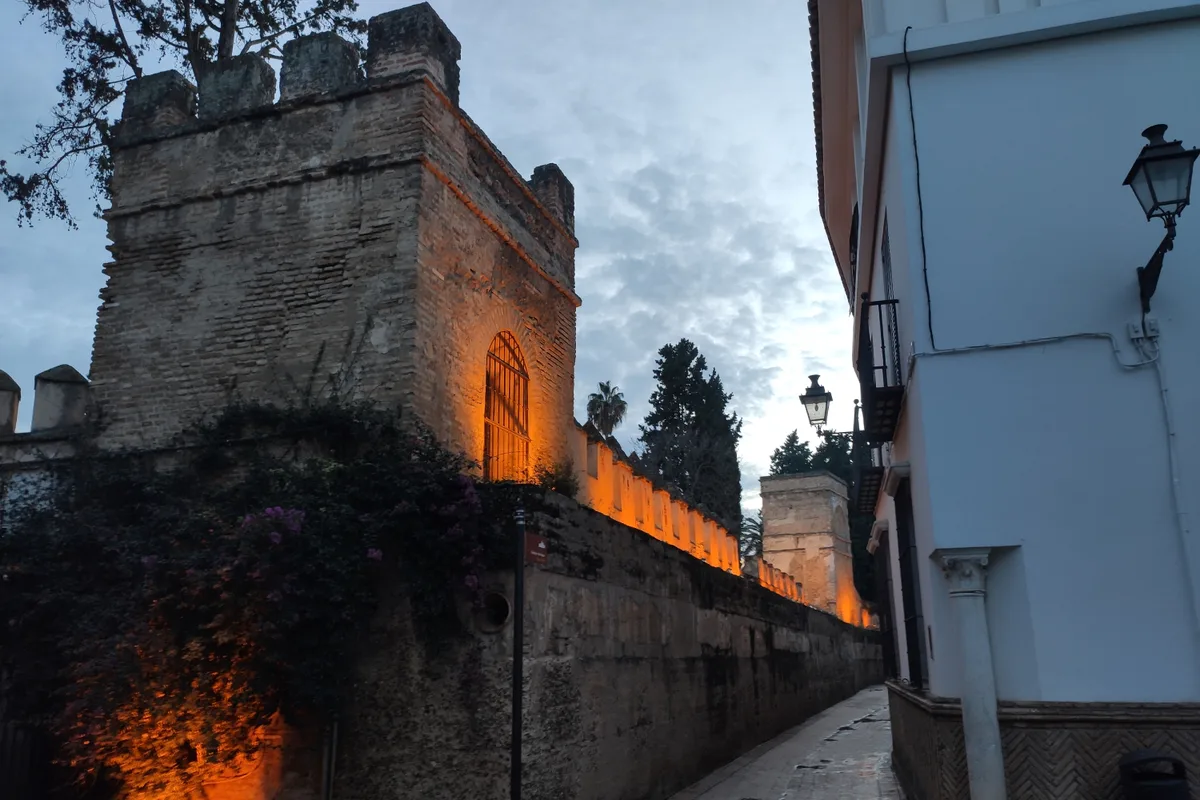
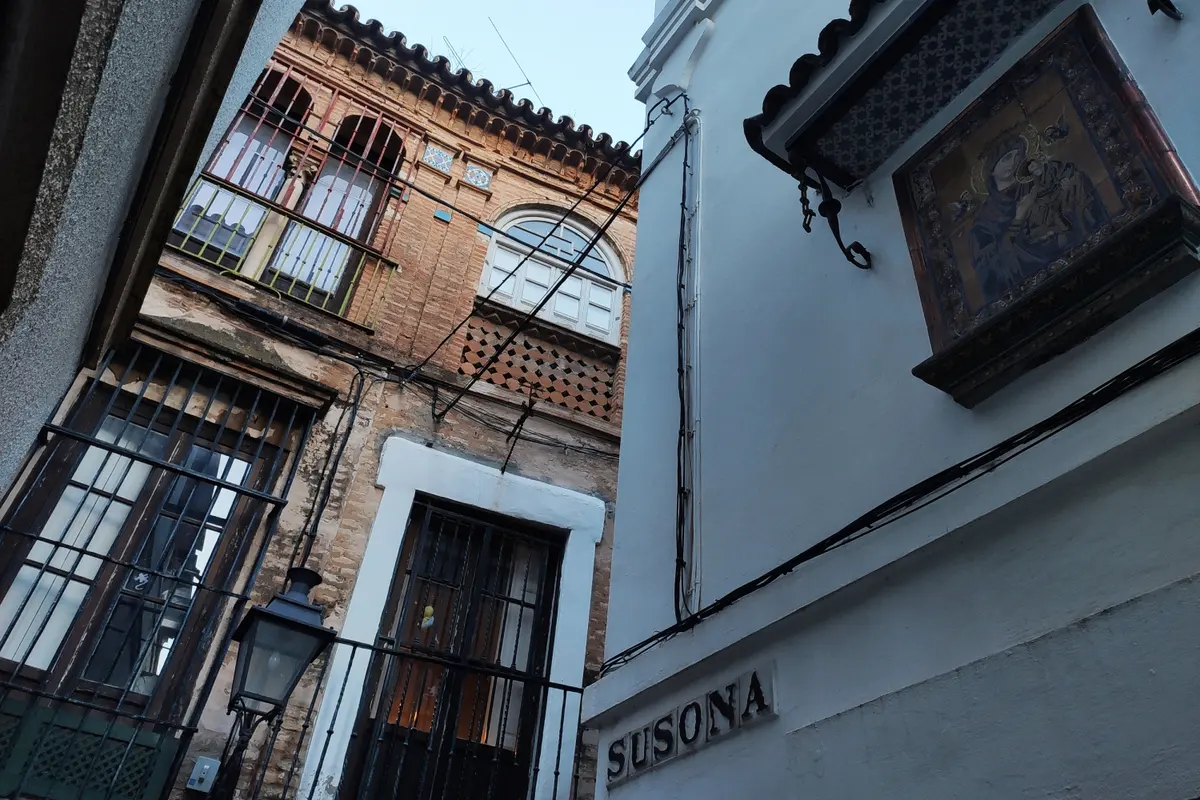
    Delving into the charming Barrio de Santa Cruz, you will discover chilling anecdotes that will make your skin crawl, living in first person the experiences that shook the inhabitants of this city.

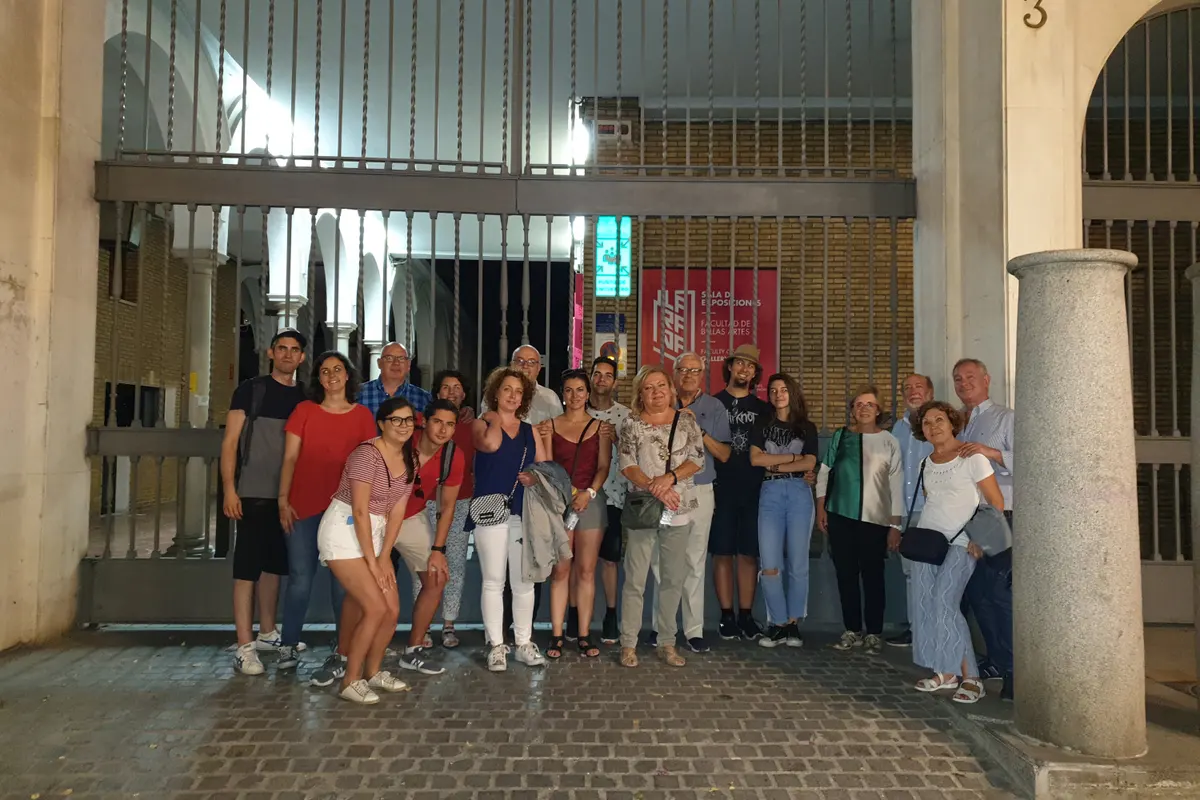
    We will guide you through the main streets and squares of the historic center until you reach the renowned Faculty of Fine Arts.

    Taking an exciting journey back in time, we will learn about the secrets and stories of when life in Seville was very different from today, discovering disturbing events that occurred in the city as we stroll through the captivating Fabiola Street or the evocative Plaza de la Alfalfa.

    Let yourself be enveloped by the stories of love, death and other events that have marked the lives of Sevillians throughout the centuries. Each story will move and surprise you, creating a deep connection with the vibrant soul of Seville.

    Get ready to live a unique experience with our private Sevilla Encantada tour and let yourself be seduced by the hidden charm of the Sevillian night!

    You may also be interested in: Sevilla Paranormal Private Tour.

    Prices

    Group (1-8 people)
    126,00 €
    Extra person
    10,00 €

    Details

    • Regular tour: Mon – Tue – Wed – Thu – Fri – Sat – Sun.
    • You can check availability in the reservation calendar
    • This tour is available at: 20:00, 21:00. Please
      check the booking calendar to confirm the available time
      on your desired date.
    • The meeting point is at Plaza del Triunfo, next to the statue of the Immaculate Conception (C. Joaquín Romero Murube, Old Town, 41004 Seville).
    • See the meeting place on Google Maps

    Approximately 2 hours.

    • Private walking tour through the historic center of Seville accompanied by a professional guide.

    Spanish and English. For English,
    click here
    . For other languages, please
    contact us
    .

    If you wish, you can consult our frequently asked questions by clicking
    here.

    If you wish, you can check the opinions of our clients on TripAdvisor or on our social networks.

    How useful was this post?

    Click on a star to rate it!

    Average rating 0 / 5. Vote count: 0

    No votes so far! Be the first to rate this post.

    Related activities

    A journey through Seville

    What to do in Seville today

    A journey through
    Seville

    Seville, the city of Heritage Sites Unesco

    Around every corner in Seville are found the beautiful sights, delicious food, and engaging activities that attract so many people to visit this city.

    Whether walking down the narrow roads in high heat or lounging at an outdoor cafe for breakfast, the atmosphere of Seville invites relaxation and tranquility, a feeling that the old winding streets and tall buildings of this ancient city help to achieve.

    In any direction, the extensive history of Seville can be seen with just a turn of the head. From the early Roman era, to the muslim rule of Al Andalus, to the later Catholic monarchy, the passing of all of these sections in time can be seen in every part of the city, architecture, food, and art alike.

    Every group that has passed through Andalucia has left its mark on the culture, and it is important to pay attention, so as not to miss the intricacies that have gone into building the beloved city of Seville.

    Giralda Seville

    Of course it is imperative to experience as much of the local, everyday culture as possible, but there are some sights that must be seen before leaving.

    These sites, such as the Alcazar, Plaza de España, and especially the Cathedral of Seville and La Giralda, which hold decades, even centuries, of Sevillian and Spanish history, are an essential part of the culture of Seville, and the city would not feel the same without them. 

    Many of the most well known and pòpularly visited monuments in Seville have been around for centuries, and have seen the shifts in power over the years, all of which left a unique impression, adding yet another layer to Seville´s rich past.

    One such monument, a must – see when visiting this city, is the Cathedral of Seville and the famous Giralda. It has one of the most interesting histories in all of Seville, and is one of the most beautiful and unique architectural masterpieces around.

    Originally a mosque, a place of worship during the muslim rule of Spain, the now cathedral boasts an intricate gothic structure, later cased by a more simplistic Roman architectural style, and supported by a collection of Roman ruins that date back centuries.

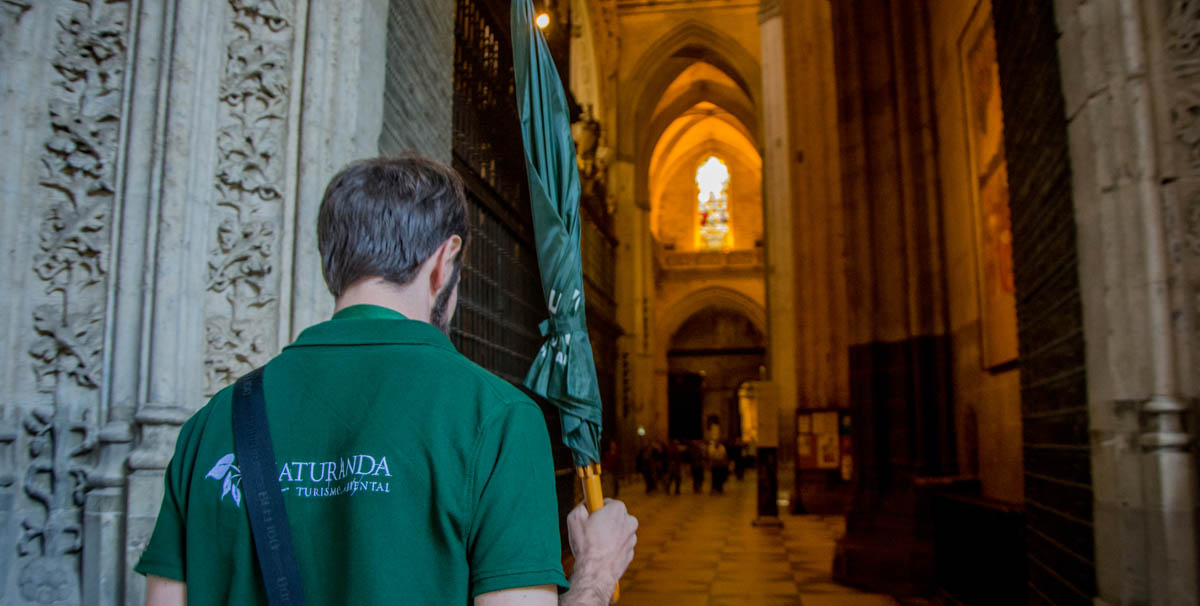
    With Naturanda, you will be able to enter into this architectural wonder, and up the 35 ramps into the top of La Giralda, where you will be able to see a panoramic view of the entirety of Seville.

    More about Seville Catedral

    When inside the Cathedral itself, take note of the historical wonders that are housed there, such as the tombs of both King Alfonso X and Christopher Colombus, the intricate metal and woodwork surrounding some elements of the decor, the wall containing the most religious figurines in the world, and the panels covering the catacombs beneath the floor. You are guaranteed an experience to never forget when visiting this stunning world heritage site, a crucial part of Seville’s history

    The next place that is sure to leave you in a state of awe is the Royal Alcazar of Seville, the oldest palace still in use in all of Europe. It’s lush garden and intricate exterior designs will definitely leave an impression on you, even before seeing the interior. 

    ceilings, grand echoing halls, and dramatic architecture in every direction. You will see stunning designs on almost every surface, shining tiles, and an interesting mix of construction styles, which can be traced back to Andalucia’s fascinating history of power struggle and shifts in rule and religion. There are open air spaces with trees and flowers planted by paths and pools of water, and a magnificent courtyard tiled and decorated with the utmost attention to detail.

    Thanks to their proximity and great significance to the city, Naturanda offers a combined tour of both the cathedral, la Giralda, and the Royal Alcazar. This way, you do not have to choose between these Sevilian masterpieces.

    After visiting both of these historical Seville landmarks, move to a different time period with the Church of the Savior tour. This is a great example of Andalusian baroque architecture, one of the most important artistic periods throughout Europe. It is also one of the largest churches in all of Seville, second only to the Cathedral.

    The exterior of this church is deceivingly simple, with its red and tan color scheme. Once inside, however, you will see ornate gold and silver metalwork on many of the walls, and an elaborate altar and lofty nave. Naturanda guide will take you through this structure, teaching you about the history of this grandiose building. It is also situated less than 10 minutes walking from the Cathedral of Seville, so if you are in the mood for some tapas and wine with a beautiful view, it is a quick trip to do so.

    The whole area is full of restaurants serving traditional spanish dishes, as well as an array of small shops, selling clothes, jewelry, spices, and anything in between, lining the narrow streets, which are easy to peruse for hours.

    If you are in the mood for an even more enchanting experience, you might want to consider the Sevilla Encantada tour. For a low price, you can be led around the city for an evening by one of our experienced guides, hearing the stories, legends, and mysteries surrounding many spaces in the city. This tour gives visitors a deeper knowledge of where they are staying, instead of just a historical perspective. If this does not sound quite enchanting enough, there is the option of a more haunting experience with the Sevilla Paranormal.

    What to do in Seville today

    Paranormal Seville Tour

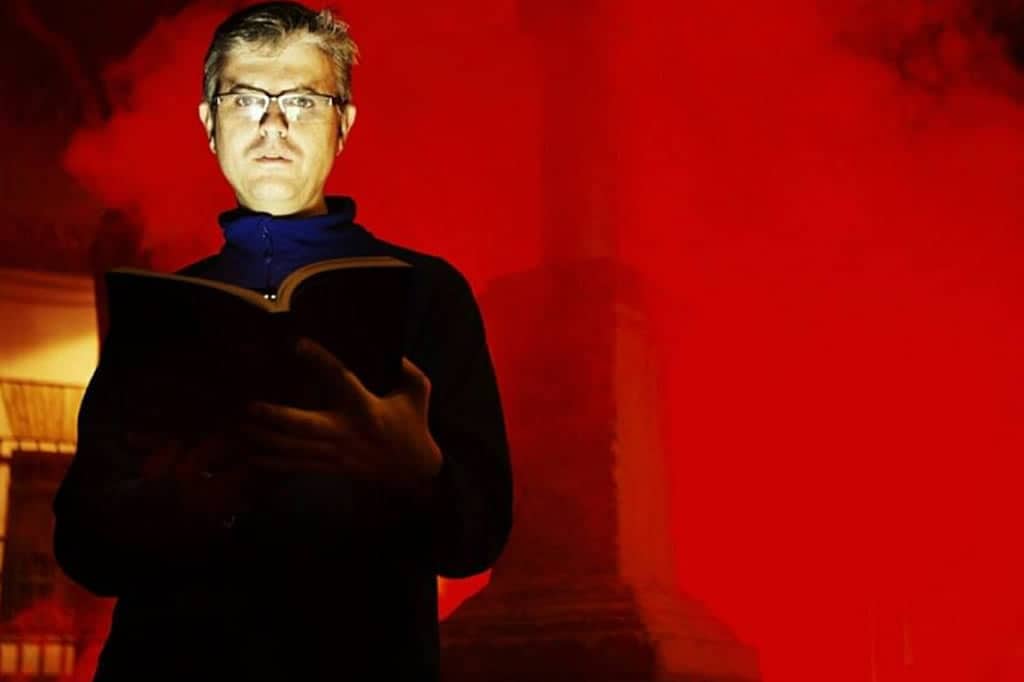
    This tour will begin just around when the sun sets, thus setting the mood for this more fantastical trip through the city. You will be led through different sites of believed paranormal sightings or occurrences, getting to know the darker side of this beautiful city. This tour is led with the help of professional guide J.M. García Bautista, who is sure to have you seeing the city in a whole new light, or darkness, by the end of these two hours. 

    If paranormal activity is not your scene of choice, don´t worry – Seville is a city full of diverse activities. For example, a visit to El Museo de Bellas Artes, one of the best art galleries in Spain. Here, you can get to know the works and artists from one of Naturanda´s experts, all in a very relaxed way. Be sure to move at your own leisurely pace, so as not to miss any of the skillful pieces displayed at the gallery.

    Sevilla Paranormal

    The Guadalquivir River and Triana

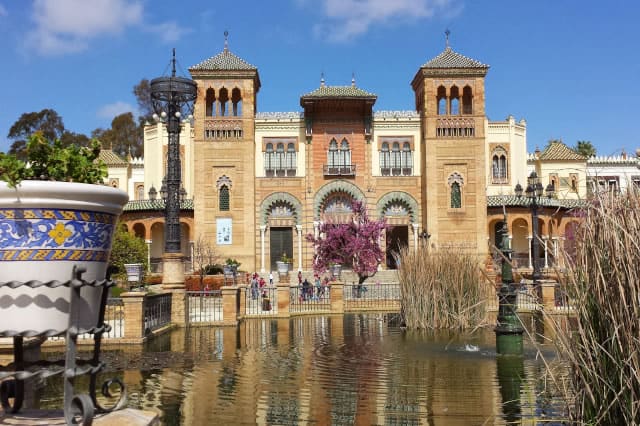
    The last places on this side of the Guadalquivir River that is a must see in Seville are the renowned María Luisa Park and the Plaza de España. This is a monumental location that is guaranteed to blow your mind. The small, colorful bridges crossing the small river of water lead up to one of the most magnificent buildings you will probably ever have the chance to see.

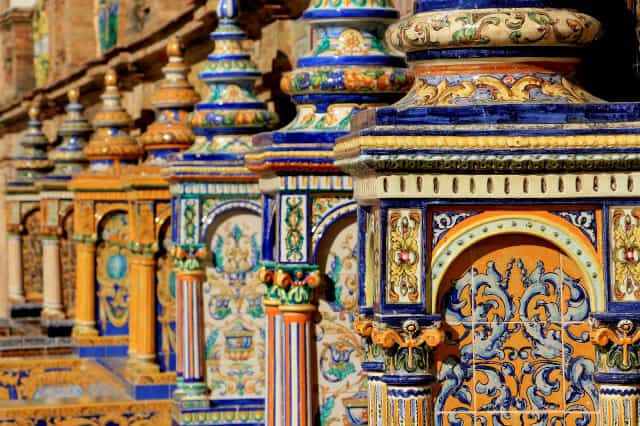
    It stretches from one end to the other, covering the entirety of one side of the plaza. This building, accented with small areas of blue and white mosaic, with long stretches of white columns supporting small arches, is a beautiful example of the impact that the muslim era of Spain had on the country´s architecture. 

    If that is not enough for you, however, it is also the location where many episodes of HBO’s Game of Thrones series were filmed. The Naturanda guide will take you around the building, informing you on the history of the architecture, significance of the building itself, and giving you fun facts about the years in which it has existed. It is truly a sight to behold, as one of the most grand landmarks in the city of Seville.

    When, if ever, you decide that you have had enough of this side of the Guadalquivir River, Naturanda offers some fascinating tours across the bridge as well. 

    With Naturanda, you can be taken over the river to one of the most unique areas around Seville: the city of Triana. There, you can take a guided tour of this fascinating area, learning about the legends and histories of this worldly neighborhood. 

    One of the many ways you can experience this city is through its food. Although most of Spain is known for serving small shareable plates, or ¨tapas¨, Triana considers them its specialty. Go with Naturanda to try out some of the city’s best tapas restaurants, getting to know the city over dinner and drinks.

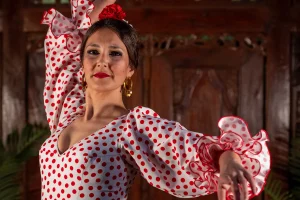
    If you are more the dinner and a show type, you can book a Tapas and Flamenco tour as well. Triana has some of the best professional flamenco dancers in all of Andalucia, even all of Spain. You can enjoy an inspiring dance performance with a full and happy stomach, after having eaten some of the best food around. 

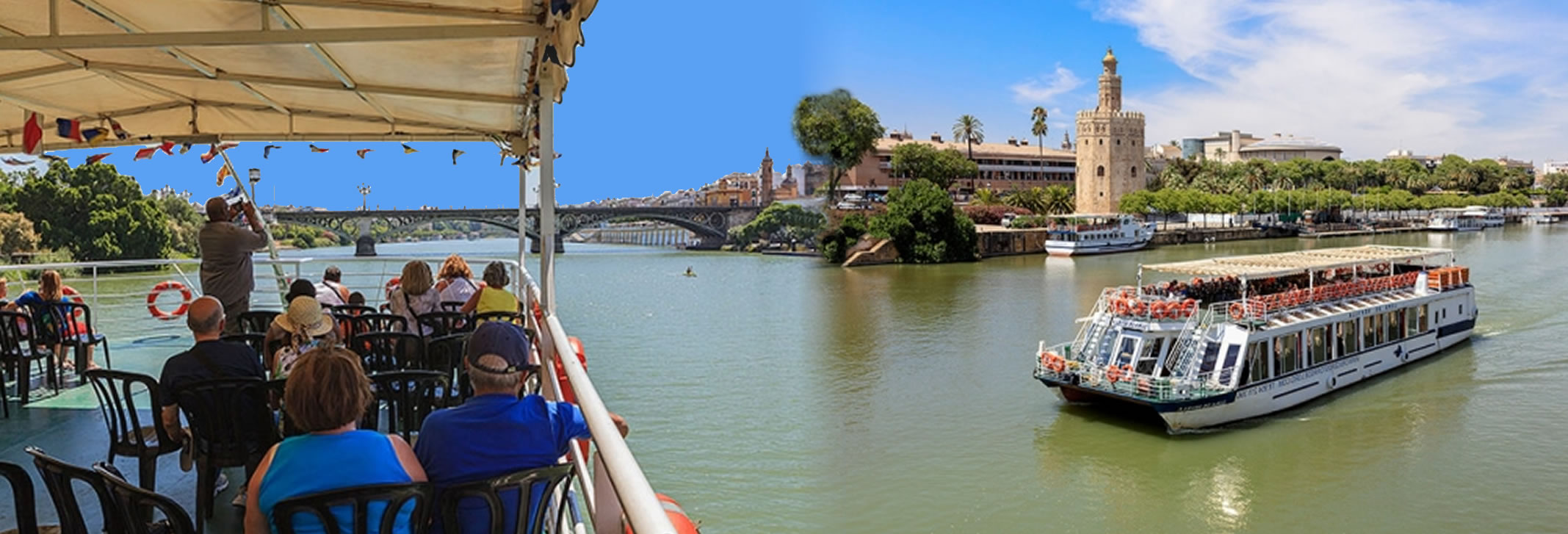
    If you happen to be looking for something a little more active, no worries, Naturanda has got you covered! There are a number of outdoor activities you can choose from when visiting Seville, such as biking or kayaking. You have the option of a guided kayak tour through the Guadalquivir River, a different and exciting way to see the city.

    Walking through the streets is one thing, but getting to know Seville while floating peacefully through the river allows you to truly appreciate the relaxed and tranquil atmosphere of the city. This tour also allows you to see both sides of the city at once – central Seville as well as Triana – as these two areas of the city border either side of the river. Another option you have is to take a guided bike tour of Seville.

    Guadalquivir River Cruise Boat

    Biking in Seville

    On this tour, you can experience the city the same way many people do day to day, as you will surely see many Sevillanos biking to and from work in your time here. Cover more ground and visit some of the more hidden beauties of Seville on bike with an expert guide, who will fill you in on some of the legends of Sevilla. 

    At the end of this two and a half hour tour, you will feel like a local yourself, having seen the ins and outs of Seville from the top of a bicycle. Not only can you take a bike tour of Seville, you can rent your own for any number of hours, days, or even a week. The price varies depending on duration, but this is an excellent way to get to know your own way around the city. 

    If you are not one for guided tours, rent a bike and pedal around as your own guide. Seville is a very bike friendly city. Everyone will know to watch for you, cars and pedestrians alike – just mind the bike lanes that are present in almost every area, either painted in green or marked with small metal plates. 

    Of course, the last thing that Naturanda would want to do is limit you or your experience in this beautiful city. For this reason, Naturanda offers private routes, where you can take a

    guided tour with just your loved ones, family, friends, or even solo. In these tours, you are able to choose your own route – just select which monuments or locations you would like to visit, within reason, and one of Naturanda´s expert guides will curate a route specific to your wishes. 

    These can be either on or off the offered list of places, and you can mix and match activities, such as tapas and a tour of a monument in central Seville. The price of these trips depends on the duration of the tour and the locations and activities selected. 

    It is impossible to choose just one place to visit in this incredible city.

    You must first consider the type of experience you want to have here, and Naturanda can help you curate an experience specific to your wishes.

    Rest assured, however, that any location you decide to visit, large or small, old or new, will leave you with an even greater appreciation for the magnificent city of Seville.

    Indice

    The Cathedral and Giralda of Seville

    Seville Cathedral Doors Tickets

    The Cathedral and Giralda
    of Seville

    The Cathedral and Giralda of Seville

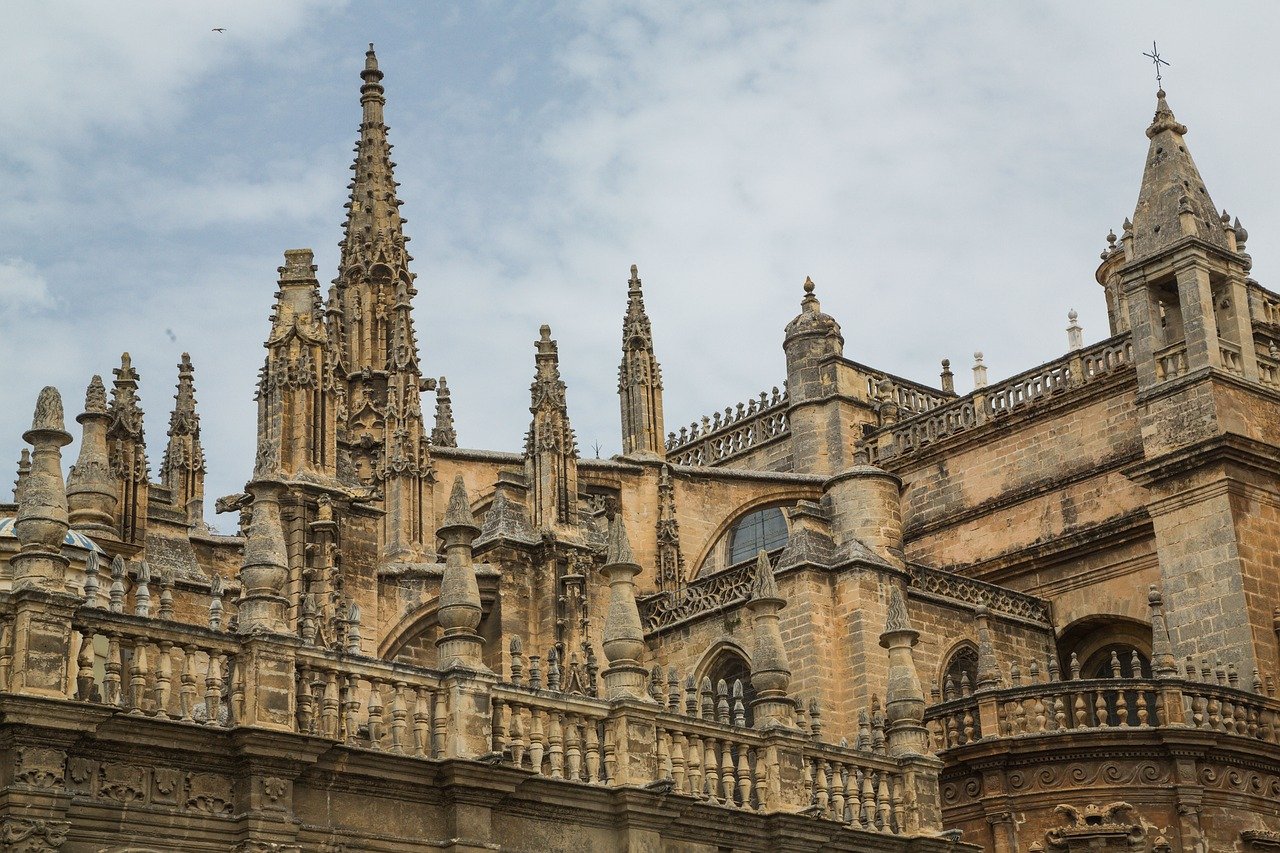
    Built in the 15th century, it is the largest Christian temple, in decadent Gothic, in the world. Her real name is Santa María de la Sede .

    It has been declared a World Heritage Site since 1987 and is one of the most visited in the city of Seville.

    It is located on the land that was once occupied by the Great Mosque of Seville , which was converted to Christian worship after being the city conquered by Fernando III “El Santo”.

    Work on its construction began in 1401 after that meeting in the Corral de los Olmos of the living forces of Seville, pronouncing that famous phrase: “Let’s make a church so beautiful and so great that those who see it carved will consider us crazy.” ”.

    Although it began to be built between 1401 and 1402, there is no record of documents that tell us about this beginning of works until 1433 on the old aljama mosque, two very emblematic parts of it are currently preserved, such as the Patio de Los Naranjos and the Giralda, another of the most visited monuments in Seville.

    Of its builders we know some of the names, and men, who participated in the construction, such as Charles Galter -also called Maestre Carlín- who, as a good master stonemason, came from the area of Normandy in France and had great experience in the construction of great cathedrals.

    He arrived in the city after leaving his country due to the Hundred Years War and it has been known that in the month of October 1506 , on the 10th, he placed the last stone in the dome of the Cathedral, that stone that put an end to the construction.

    In this way the completion date (1533) is known and the start, although doubtful, is estimated to have been at the beginning of the 15th century.

    In 1755 it happened that the Lisbon earthquake affected the construction and minor damage was produced.

    To solve all of them, the architects Diego de Riaño, Martín de Gainza and Asencio de Maesa intervened in the reform and reconstruction, as well as, related to the complex, Hernán Ruiz who worked in the second body of the Giralda.

    The cathedral dependencies were completed in 1593 as well as the cathedral auctions.

    Equally important in the construction of the cathedral, in its decorations, in the hidden symbology, Lorenzo Mercadante from Brittany intervenes decisively, leaving a series of clues on the doors where he intervenes with a message to be discovered.

    The periods of the Cathedral

    What to see in Seville in one day

    It was the Almohad caliph Abu Yacub Jusuf who ordered the construction of the great mosque in Seville between April 1172 and March 1198. It was officially inaugurated on 30 April 1182, with the work being carried out by the Andalusian architect Ahmad Ben Baso, who was also responsible for the palaces of La Buhaíra in Seville.

    It is said that this mosque had a floor plan measuring 113 x 135 metres and a surface area of over 15,000 m², with 17 naves with horseshoe arches and a beautiful courtyard. All that remains of this is the Patio de los Naranjos (Courtyard of the Orange Trees) with its Christianised entrance gate, known as the Puerta del Perdón (Gate of Forgiveness).

    After the Almohad period we find the Mudejar, which goes from the year of the Reconquest in 1248 to 1401 . The mosque became a “major mosque” consecrated to Christian worship.

    In the Cathedral are the remains of kings such as Fernando III “El Santo” , Beatriz de Suabia as well as his son King Alfonso X “El Sabio” .

    For a century and a half, the mosque functioned as a cathedral until its poor state of preservation and the epidemics that devastated the city made it advisable to build a large temple.

    Seville Cathedral Ceilings

    It is the third stage of the cathedral, the third period, when on that famous 8th of July 1401, the authorities and canons said: ‘Let us build a church so beautiful and so grand that those who see it built will think us mad’ and, according to the chapter minutes, such a magnificent construction should be ‘so great and so good that there is no other like it’.

    The cathedral project was carried out by the master Alonso Martínez , continued by the master builder Ysambarte and the Frenchman Carlín.

    The Cathedral has suffered damage throughout its history, such as that caused on 28 December 1511 when one of the pillars collapsed and the dome covering the transept fell. The architect Juan Gil de Hontañón continued the work and also followed the stylistic line, designing a new dome that was completed in 1519. The dome falls again 370 years later, on August 1, 1888, being rebuilt by the architect Joaquín Fernández.

    From the Renaissance period, in 1528, we have the Main Sacristy, the Chapter House and the Royal Chapel and the Sacristy of the Chalices and the Alabaster Chapels were completed. Names such as Diego de Riaño, Martín de Gainza, Asensio de Maeda and Hernán Ruiz are located here.

    From the Baroque period, between 1618 and 1758 , there is the Sagrario church, the work of Miguel de Zumárraga, framed in the cathedral but independent from it.

    In neoclassical style we have dependencies in the temple, overlooking the area of the avenue of the constitution and the Archivo de Indias . The Cathedral had a series of annex buildings that were demolished between 1762 and 1797.

    It also has a neo-Gothic part, which goes from the years 1825 to 1928, although efforts were made to maintain its style and respect the decadent Gothic of its construction. In stage highlights the work of the architect Demetrio de los Ríos in 1866 and that is visible in it. Adolfo Fernández Casanova, between 1895 and 1917, completed the gates of La Concepción and San Cristóbal or del Príncipe.

    As a curious fact to say that in the Monastery of Bidaurreta de Oñate (Guipúzcoa) there are the plans of the Cathedral. There was another copy but they were burned in the fire of San Lorenzo del Escorial.

    In the Cathedral, the Metropolitan Council maintains the daily liturgy as well as important festivities such as Corpus Christi with the dance of the Six, the Immaculate and the Virgin of the Kings, which coincides with the name day of Santa María de la Asunción or de la Sede.

    In the cathedral of Seville there is also a treasure and carvings of important artistic value as well as the remains of Christopher Columbus, discoverer of America in 1492.

    The doors

    Seville Cathedral Doors Tickets

    The covers are very outstanding, such as the Baptism, from the 15th century, the work of Lorenzo Mercadante de Brittany. The Cover of San Miguel or the Birth are by Lorenzo Mercadante de Brittany and his disciple Pedro Millán. It is a well-known door because it is where the brotherhoods enter during Holy Week, another of the city’s attractions.

    The main portal or the Assumption of the 19th century, the work of Jovellanos and Ricardo Bellver between 1877 and 1898 .

    The Puerta de San Cristóbal or del Príncipe is from 1887, designed by Adolfo Fernández Casanova and finished in 1917, the first design is the work of Demetrio de los Ríos. Likewise, the Puerta de la Concepción overlooks the Patio de los Naranjos, designed by Demetrio de los Ríos and finished by Adolfo Fernández Casanova in 1895, respecting the decadent Gothic style.

    La Puerta del Lagarto overlooks the Patio de los Naranjos and is named for a “curious” lizard hanging from the ceiling along with other details that are very symbolic and little ornamental.

    The Puerta del Sagrario is by Pedro Sánchez Falconete from the end of the 17th century and overlooks the church of the Sagrario.

    The Puerta del Perdón has that access to the Patio de los Naranjos from Calle de los Alemanes. It belongs to the old mosque, visible due to its pointed horseshoe arch. The sculptures are by the sculptor Miguel Perrin who is also involved in the Puerta de Palos or the Adoration of the Magi. Its name is taken from the wooden railings that separate it from the old dependencies of the cathedral chapter.

    La Puerta de Campanillas is so called because it was the one that served to call the workers, it represents the entrance of Christ to Jerusalem, also Miguel Perrin.

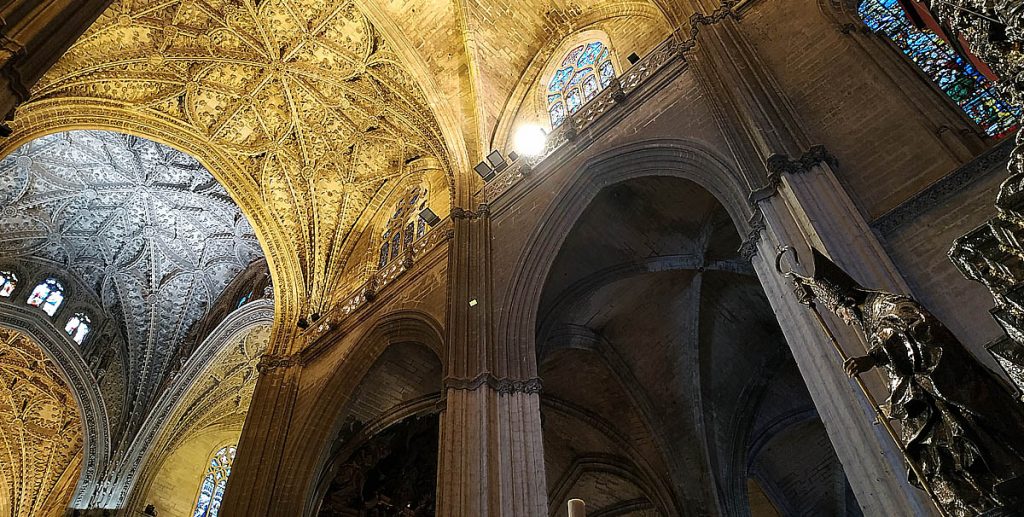
    Highlights of the Cathedral are its chapels, its imposing high altar, the beautiful stained glass windows, the choir or, simply looking at the ceiling and contemplating the finishes, the ribs of the vaults.

    The interior of the Cathedral of Seville

    Seville Cathedral Doors

    If there is one place that stands out among all the places we can see in the Cathedral, it is undoubtedly the high altar, originally designed by Pedro Dancart, measuring 20 metres high by 18 metres wide and divided into seven vertical sections. The central section stands out, being twice as wide, four sections high and equipped with a bench at the bottom. Very rich ornamental work with 28 scenes from the life of Jesus Christ and the Virgin Mary.

    But in the year 1550 the council decides that it must have two lateral streets on each side located at right angles attached to the initial set and this originated a new carving work of 16 new reliefs with scenes from the old and the new testament, being a total of 44.

    Inside the Cathedral, the main altarpiece is very prominent in the central nave and in a marked Renaissance style, being highly valued within the History of Art. It was carried out in the year 1482 in which artists of the stature of Pedro Dancart, Jorge Fernández Alemán, Roque Balduque and Juan Bautista Vázquez el Viejo participated, who carried out the crucifixion of the Million, in the fifteenth century, and who, in the city, also among others, he made the image of Christ of Burgos. In this altarpiece there is an image of the Virgen de la Sede from the 13th century, who is the patron saint of the Cathedral.

    The second phase began in 1550 and was completed in 1564 by Roque Balduque, Pedro Becerril, Juan de Villalba and Diego Velázquez, who was not the Sevillian painter despite sharing the same name. Pedro Bernal and Juan Reclid joined the project in 1552, Luis del Águila in 1553, Pedro de Heredia, Juan López and Andrés López del Castillo in 1554, and the sons of Andrés López del Castillo in 1555.

    The magnificent Royal Chapel is the “head” of the Cathedral with a characteristic square floor plan with an apse and two side chapels. If we look up we will see the beautiful hemispherical dome and lantern from the period of 1567 and 1569, the work of Hernán Ruiz el Joven.

    At this point we find the pantheon with the impressive silver urn of King San Fernando in an exceptional work by Juan Laureano de Pina in baroque style. We also find the tombs of Alfonso X of Castile and his mother, Queen Beatrix of Swabia. We also find the remains of Pedro I of Castile and his wife, Queen María de Padilla, presiding over everything is the ivory image of the Virgen de las Batallas, from the 13th century.

    On the altarpiece we find the patron saint of Seville, the Gothic image of the Virgin of the Kings, who is also the patron saint of the city and the archdiocese.
    The religious sculptures of saints in terracotta on the shelves and under the canopies are of enormous merit. There are 59 of them in a combination of styles such as Gothic, Renaissance and Mannerist, the work of different periods and artists such as Miguel Perrin, Juan Marín and Diego de Pesquera.

    Virgen del Reposo, from 1575, with her sleeping Child, possible authorship of Miguel Perrin in front of the gate of the Royal Chapel, many pregnant women entrust themselves to her so that the birth goes well.


    There is a legend that tells us that centuries ago a Jew passed by his feet who blasphemed for being the Virgin the origin of Jesus, it is said that he converted to Christianity and repented of everything he said after which he dedicated himself to spreading the devotion to the Virgen del Reposo and the tradition with future women in labor. For all this she is known as Our Lady of Bienpariese.


    Doña María Osorio had a great devotion to her and, for this reason, in 1554 she ordered the construction of a chapel or niche to Our Lady of Rest in the center of this entire area, known as the trasaltar, under it is the chapel of Our Lady of Soterraño .

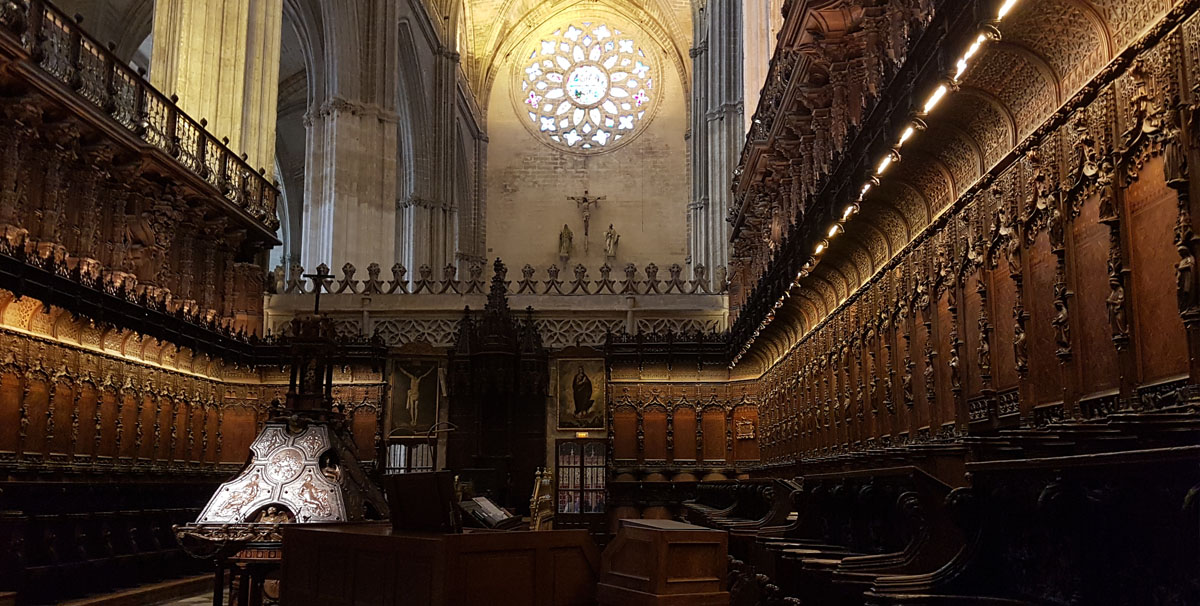
    Impressive is the Choir made with stone walls on three sides and which is located in the fourth and fifth vaults of the central nave and the front is closed with a Renaissance-style grille by Francisco de Salamanca in 1593.

    The typical stalls of the Choir have 127 seats with marquetry backs in different types of wood that give the ensemble a particular color scheme. All the reliefs of scenes from the Old and New Testaments are very admirable in them. We can see from sweet expressions to hard, grotesque faces.

    The larger panels at the entrance to the choir feature pointed arch motifs separated by columns topped with pinnacles, very much in the Gothic style.
    There are three main seats, those of the archbishop and his assistants, in an exceptional artistic ensemble of carvings. On one of them we can read: “This choir was made by Nufro Sánchez, carver… 1475”, as a reminder of one of the craftsmen who worked on them, along with master Pedro Dancart and his disciple Juan Alemán, who completed the seating in 1511.

    In the Trascoro, we find another incredible Baroque work by Miguel de Zumárraga from 1619. It was completed in 1635 after a decade of inactivity and features very valuable marble and jasper. It also has bronze decorations, reliefs, busts, and a Gothic painting of the Virgin of Los Remedios presiding over it, with a marked Italian influence in its style.

    A jewel is its organ, famous worldwide and in operation with a great maintenance work by the conservators of the Cathedral of Seville. It is the authorship of Aquilino Amezua in 1901 and restored by Gerhard Grenzing in 1996. The previous one belonged to Jordi Bosch i Bernat, destroyed in the collapse of 1888, it was one of the best organs in Europe.

    The secret of the organ is that it is not one but two and facing each other, they are two twin instruments that sound from the same keyboard simultaneously, as a curiosity to say that it has 15,000 pipes that give it unparalleled harmony.

    There are four Alabaster Chapels, small and very unknown, from 1515, by the master Juan Gil de Hontañón and continued by the architect Diego de Riaño, these are the Chapel of the Immaculate, Chapel of the Incarnation, Chapel of the Virgin of the Star and Chapel of San Gregorio.


    The Chapel of the Immaculate has an impressive altarpiece by Juan Martínez Montañés, commissioned by Jerónima Zamudio on February 14, 1628, the widow of the jury Francisco Gutiérrez de Molina. It is an Immaculate Conception , in its realization, and due to a lawsuit due to delays, it was when the famous image maker said: “it will be one of the first things in Spain and the best thing that the aforementioned has done”. The image of the Immaculate Conception presides over the altarpiece inaugurated on December 8, 1631. She is popularly known as La Cieguecita because her eyes seem almost half closed, almost closed.

    Symbolically she is a Virgin Girl , 164 centimeters tall with a tunic that is very tight and gathered with a girdle that symbolizes that she is a maiden, highlighting the quality of the work of the mantle with multiple folds. On the head a crown with twelve stars in reference to the twelve tribes of Israel. At its feet, on the pedestal, the faces of three angels above a dragon symbolise sin. The Chapel of the Incarnation has an imposing altarpiece by Francisco de Ocampo y Felguera from 1630, centred around The Annunciation. The images of Saint John the Baptist, Saint John the Evangelist, Saint Dominic, Saint Francis and Saint Anthony are particularly striking.

    In the Chapel of the Virgen de la Estrella we find a Renaissance image of the Virgin, possibly the work of the Gallic Renaissance sculptor Nicolás de León , from 1530; the baroque altarpiece is by Jerónimo Franco from 1695.

    The Chapel of San Gregorio has an image of the saint carrying a book, as a curiosity to say that in it you can see the signature of its author Manuel García de Santiago from the 17th century.

    On the altar of Magdalena, we find the patronage of Pedro García de Villadiego and his wife Catalina Rodríguez, from 1537. An interesting anecdote is that both are represented in the altarpiece (very much in keeping with the taste of the time), with Don Pedro next to Saint Benedict and Doña Catalina next to Saint Francis.

    The motif it represents is The Annunciation in the attic and The Magdalene at the feet of the Risen Christ with paintings by an anonymous disciple of Alejo Fernández from 1537.

    The stained glass window by Arnao de Flandes is exceptional, located next to the altar, where we can appreciate, in a colorful way, Saint Sebastian with the face of Emperor Carlos I. A new curiosity in the Cathedral is the duplicity of this altar, since there is another one on the north side of the transept nave of the Cathedral.

    In the center of the altarpiece the relief with representation of the Assumption of the Virgin with paintings of San Ildefonso and San Diego de Alcalá. The patrons of the same are found in the banks, they are Juan Cristóbal de la Puebla and his wife who endowed it in 1593.

    The Chapel of San Andrés stands out for the impressive carving of the Cristo de la Clemencia by Juan Martínez Montañés , in 1603, or Cristo de los Cálices, and a clear exponent of baroque sculpture, very serene and with the detail of having 4 nails fixing the crucified to the log.

    We found the Gothic tombs of Alvar Pérez de Guzmán, his father, his wife, Elvira de Ayala, and his son, as well as a painting, presumably by Lucas Jordán from 1700, depicting ‘The Transfer of the Ark of the Covenant’ and ‘The Song of the Prophetess Mary’ in thanksgiving after crossing the Red Sea. In the upper area, there is a copy of the Martyrdom of Saint Andrew, by Juan de Roelas, and the original can be admired in the Seville Museum of Fine Arts.

    There are many other points of interest inside the Cathedral but, finally, it could not be done in any other way than visiting the tomb of Christopher Columbus where his remains rest.

    His last resting place is from the heights provided by four monumental pages that represent the four kingdoms of Spain that existed during the lifetime of Columbus, these are: Castilla, León, Aragón and Navarra.

    The tomb was one of the last additions to the Cathedral, being located in 1899 under the design of the sculptor Arturo Mélida. Few know that, originally, it was located in Cuba , in Havana and was transferred to Seville after the loss of the colonies in 1898.

    Columbus died in Valladolid in 1506 being transferred to Seville by order of his brother Diego. In 1542 his remains were transferred to Santo Domingo (Dominican Republic), in the Cathedral of Santa María , where they remained for 200 years to go to Cuba until 1898 when they returned to Seville.

    The Cathedral of Seville is a monument that is visited by millions of people a year, in the historic center of the city and close to such emblematic places as the Barrio de Santa Cruz or monuments such as the Reales Alcázares or its inseparable Giralda. Contemplating everything it has to offer the visitor is a delight for the eyes and the soul, as could not be less in a temple of this category and significance. A must for every visitor.

    Giralda, the Tower of Seville

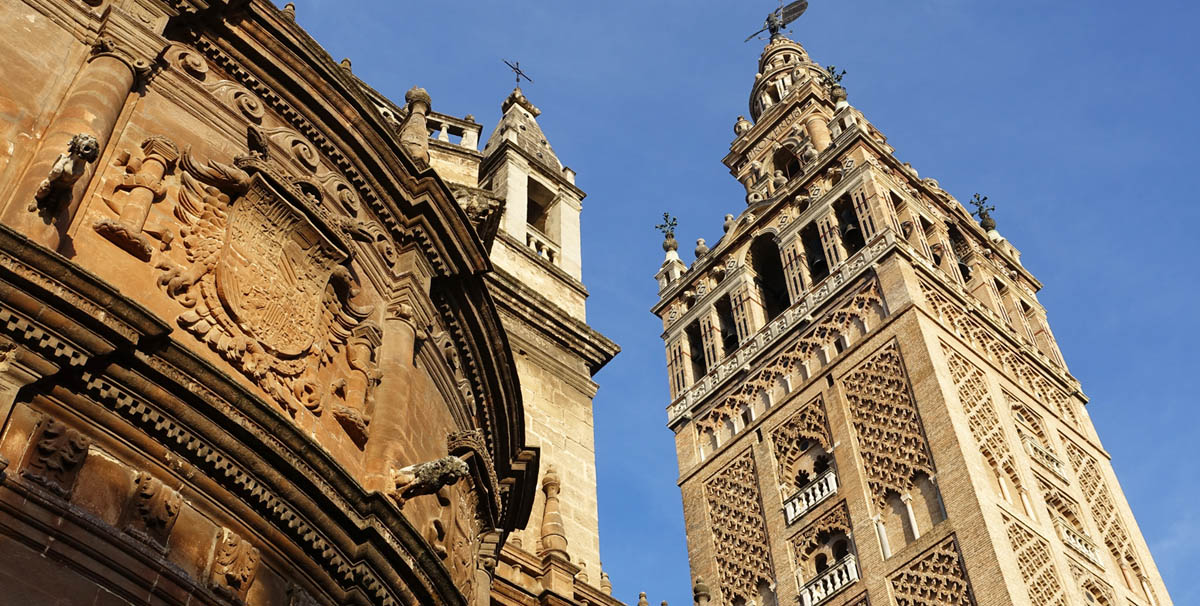
    Giralda Seville

    The Giralda is the most characteristic monument of the city of Seville, located next to the Cathedral and being the perfect bell tower of the same.

    It has a curious past that has led it to be a stylized symbiosis of Muslim and Christian culture.

    The Tower of Seville has an Arab past where it was an old minaret that was located next to the Great Mosque at the end of the 12th century. Thus, two thirds of it are of an Almohad character while the entire upper part is of Christian architecture as it was the base of the bell tower that can be seen today.

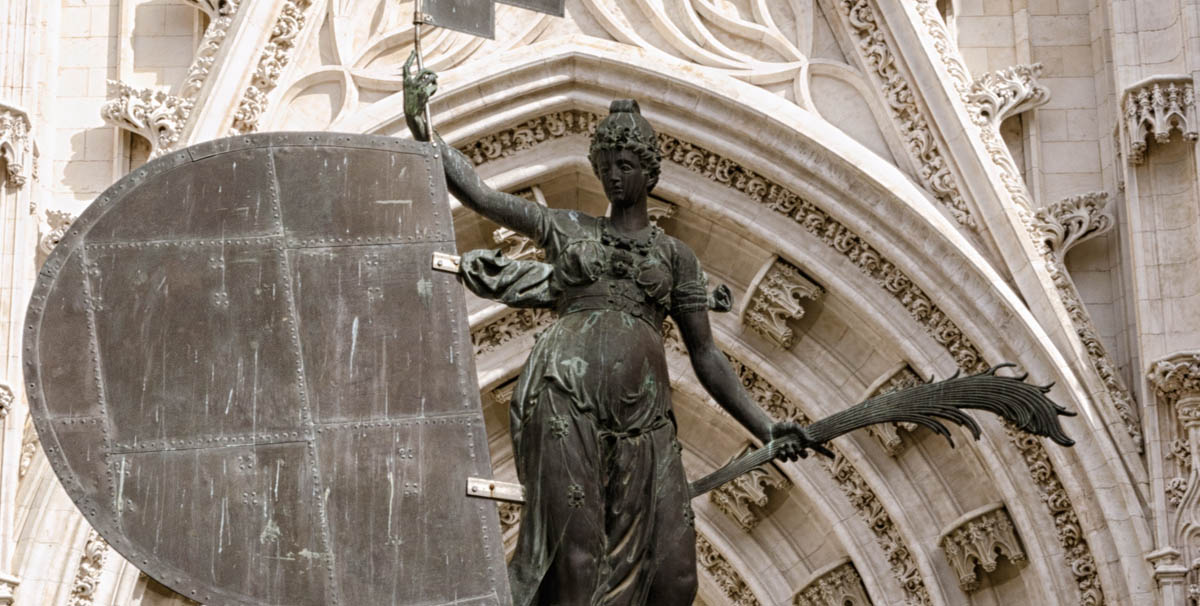
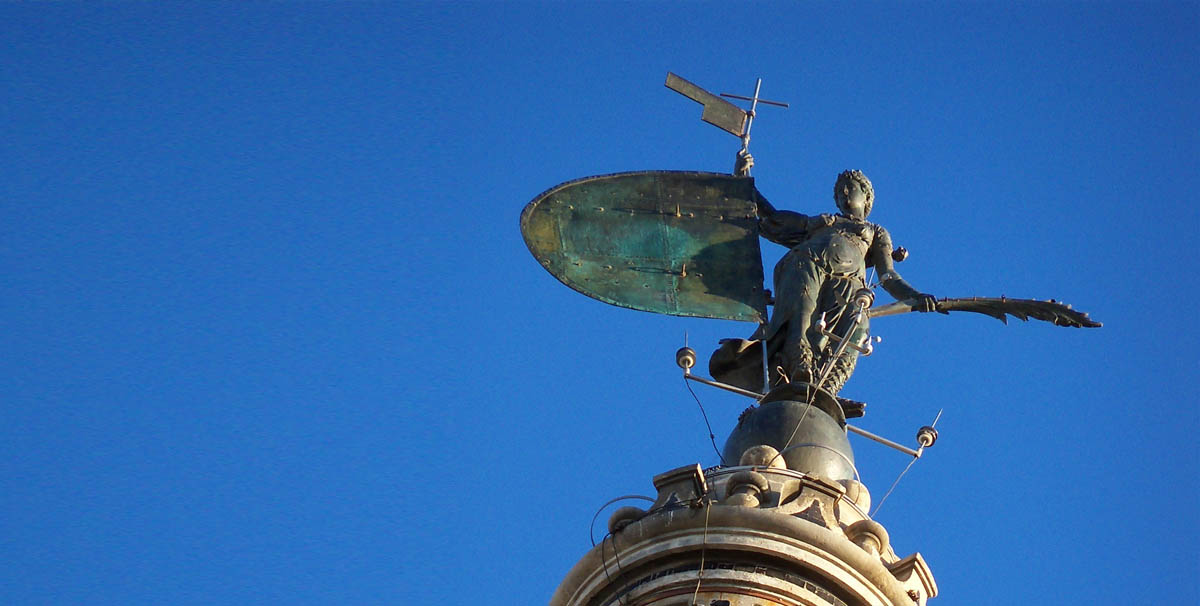
    Topping the tower is the sphere on which rests its most representative feature, the figure of the Giraldillo, measuring 7.69 metres. actually represents the Triumph of Faith and is a weather vane. It is precisely this figure that gives the tower its name, as it is a weather vane that turns, and from this turning, at the mercy of the wind, comes the Giraldillo and, from this, the Giralda.

    You have to know about it that until not too long ago it was the tallest building in Andalusia with its 104.1 meters high . Compared with other monuments in Europe, for comparison, we find that the Tower of Pisa (Pisa, Italy) measures 55.8 meters or Big Ben (London, United Kingdom) which is 96.3 meters.

    It has state protection when declared, on December 29, 1928, National Heritage and in 1987 as a World Heritage Site.

    Giralda Periods

    Giralda Of Seville Seen From Below

    Being Seville capital of Al-Andalus we have that a stage is the one in which the construction of the most characteristic buildings of this stage takes place, of it is the main mosque that replaces the one that was in the Plaza del Salvador , it was the century XII, the year 1172.

    It was the caliph Abu Yaqub Yusuf who ordered, on May 26, 1184, the construction of the mosque’s minaret. With the death of Yusuf, the project continues under the mandate of his son and new caliph, Abu Yúsuf al-Mansur (Muminin).

    On August 10, 1184 , the original project that was to keep the minaret connected to the walls of the citadel was continued. In its foundations there was a depth of 3.60 meters that today is visible the part of 3 meters of masonry that comes out of the sidewalk plus a series of marble altars from Roman times that are very visible at its base.

    Around March 2, 1188 and February 18, 1189, the works stopped when Ibn Saíd, who was the almojarife in charge of recording expenses, was dismissed and Abu Bakr replaced him. The contribution of the master builder Ali al-Gumari (Alí de Gomara) and the death of Ibn Basó stand out in the construction. At this time it was decided to continue with the works of the minaret with brick from the stone plinth, although there were many interruptions in its construction.

    It was on 19 June 1195 when Emir Abu Yaacub al-Mansur defeated Castilian King Alfonso VIII in battle at Alarcos. Upon his return to the city, he ordered that large golden bronze spheres be placed on top of the minaret, which were installed on 10 March 1198.

    These were the popular “four apples”, the yâmûr , which were inserted into a log and whose brightness was said to be seen from 40 kilometers away.

    The Giralda Bodies

    Giraldillo Of Seville

    Among the bodies, the first one stands out with 50.51 meters high and a square floor plan of 13.61 meters wide. The second body was 14.39 meters high and its floor plan was square, 6.83 meters wide, topped with a dome and on top of it the yâmûr

    When the city was conquered by Ferdinand III “the Saint”, in 1248, it was decided to consecrate the mosque as a Christian temple and replace the yâmûr in the tower to put a cross and, under it, a weather vane, although it is true that the yâmûr it was not withdrawn.

    On the occasion of the earthquake of August 24, 1356 , the belfry with the “four apples” fell and it was decided to put a bell and a cross in its place, since it was already the original bell tower.
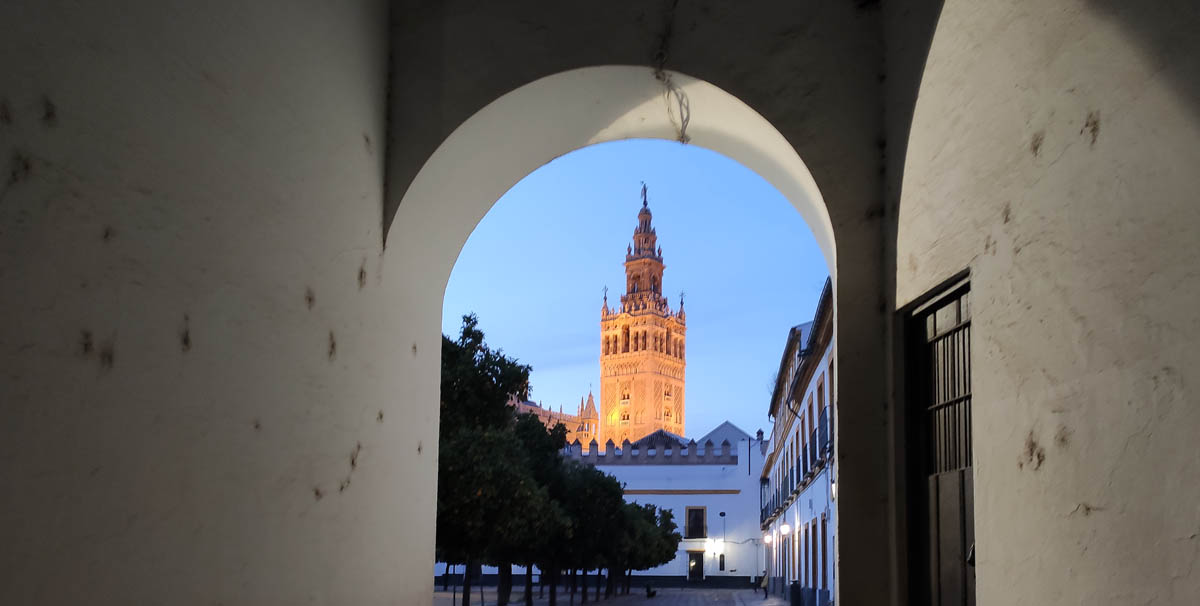
    It is interesting to note that the tower, or minaret, was nearly demolished because it does not appear on the original plan—the only one that remains of the cathedral—but it was not destroyed for two reasons: economics and the rush to inaugurate the Christian temple.
    Another interesting detail is that the Giralda was decorated with a series of paintings, such as the frescoes by Luis de Vargas dating from 1553 to 1558. so under the first balcony we find the Annunciation (north side), and in the stucco areas flanking that balcony we find Saint Isidore and Saint Leander and Saints Justa and Rufina on the other side. Above Christ Crucified with the Virgin Mary and Saint John the Evangelist as well as other paintings of saints.

    It has also been discovered, in recent restorations, that it had polychrome decorations with reddish tones that would have been lost over time.

    Hernán Ruiz would be in charge, in 1556, of replacing Martín Gaiza and that he would renovate the tower by adding a body of bells.

    It is said that the Giralda has other twin towers like the one found in Marrakech, Koutoubia or Rabat, but these are made of masonry and the Giralda is made of bricks.

    bell names

    Giralda Bell Of Seville

    Among the bodies of the Giralda we have:

    • 1.- Body of bells.
    • 2.- Clock body.
    • 3.- Body of the stars.
    • 4.- Body of the carambolas.
    • 5.- Plume.
    • 6.- Sphere.
    • 7.- Giraldillo.

    You can also read the legend or inscription: “TURRIS (E) – FORTISSIMA (S) – NOMEN DNI (O)- PROVERB” (“The strongest tower is the Name of the Lord”).

    Striking with the jars of lilies, the work of the foundryman Bartolomé Morel on February 28, 1568, made of iron and bronze, designed by Hernán Ruiz inspired by an artifact to study the winds called aeolipiles.

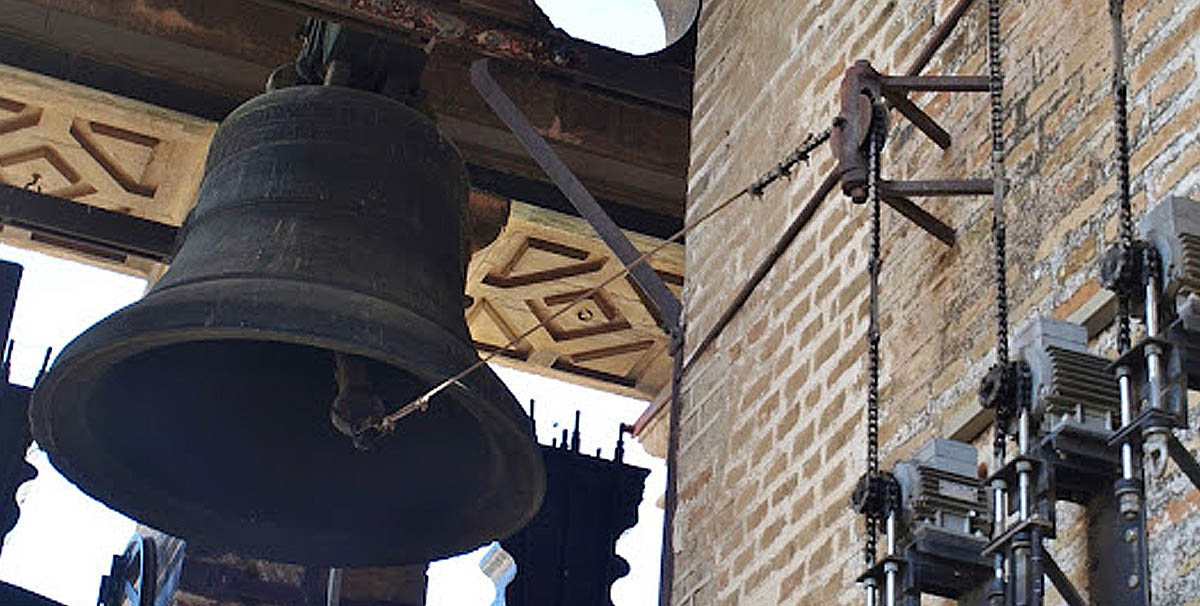
    All the bells of the Giralda they have a name, there are 24 in total, 18 of them with tumbling, 6 with clappers and it is the cathedral that has the most bells in Spain; 13 have male names, the holy men: San José, San Sebastián, San Laureano, San Isidoro, San Hermenegildo, San Juan, San Pablo, San Pedro, San Fernando, San Juan Bautista, Santiago, San Cristóbal and San Miguel); 9 of women: Santa Cecilia, Santa Justa, Santa Rufina, Santa Lucía, Santa Florentina, Santa Bárbara, Santa Inés, Santa Catalina and Santa María la Mayor); the remaining two are those of All Saints and the Holy Cross.

    The largest of all, that of Santa María la Mayor , weighs 5,362 kg and the smallest, that of Santa Cecilia, 138 kg. The oldest bell is from the 15th century (that of Santiago is from 1438), the most modern six that were recast in 1998.

    José Gestoso in “The venerable image of the Virgen del Olmo with historical news from the tower of the holy Cathedral Church where it is located”, which reads as follows:

    “From this part begins the Greco-Roman work that consists of three architectural bodies, the first has its four facades the same width as the tower, it is where the bells are located. Inside, under the middle arch that looks north, and is the main face, is the Mayor, called Santa María ; and behind him, on the front facing south, is the second, called San Miguel, in the same way. In the four angles, there are as many in this way: to the right of the Mayor, Santiago; to the left, Santa Cruz. The others, on the north façade, Santa Ruina, San Hermenegildo; the Mayor, Saint John the Baptist and Saint Lucia; in the east, San José, San Laureano, San Pedro, San Juan Evangelista and Santa Inés. At noon, Santa Bárbara, San Isidoro, San Miguel, San Pablo and Santa Cecilia; to the West, Santa Justa, San Fernando, San Cristóbal, San Sebastián and Santa Florentina. The one at the clock is called San Miguel de las Victorias, and completes the number of twenty-five; and in one of the four arches of the second section, where this one is located, there is also the Matraca, which is only played on Maundy Thursday, Good Friday and Holy Saturday.

    Replicas of the Giralda

    Giraldillo Of Seville Replica

    We find replicas of the Giralda in the Tarragona town of Arbós, Carmona, in Badajoz, in Kansas, in Miami, the disappeared one in New York (United States), Leuven (Belgium) or in San Juan de Puerto Rico (Puerto Rico).

    Do you want to book a guided tour in Seville? Perfect, we offer you more than 30 different visits Guided Tours of Seville .

    Index

    Exportnaturandarecurso 10.png

    ¿First time in Naturanda?

    Enjoy a 5% OFF
    in all our excursions and activities.

    DISCOUNT CODE*

    HOLA

    *Only available in naturanda.com


    Naturanda Turismo Ambiental S.L ha sido beneficiario del Fondo Europeo de Desarrollo Regional cuyo objetivo es promover el desarrollo tecnológico, la innovación y una investigación de calidad; garantizar un mejor uso de las tecnologías de la información y conseguir un tejido empresarial más competitivo y gracias al que ha conseguido la Implantación de Web-app landing para mejorar la competitividad de su negocio a través de la incorporación de nuevas tecnologías. Esta acción ha tenido lugar durante el ejercicio 2022. Para ello ha contado con el apoyo del Programa Competitividad Turística de la Cámara de Comercio, Industria, Servicios y Navegación de Sevilla.Una manera de hacer Europa.